
Boxing Strength Training App 2026: What Fighters Actually Need From Gym Work
A boxing-focused guide to choosing a strength training app: punch transfer, gym programming, video feedback, fatigue tracking, and simple cues that survive hard rounds.
Titans Grip
Boxing Coach, 15+ years coaching footwork, head movement, and ring IQ
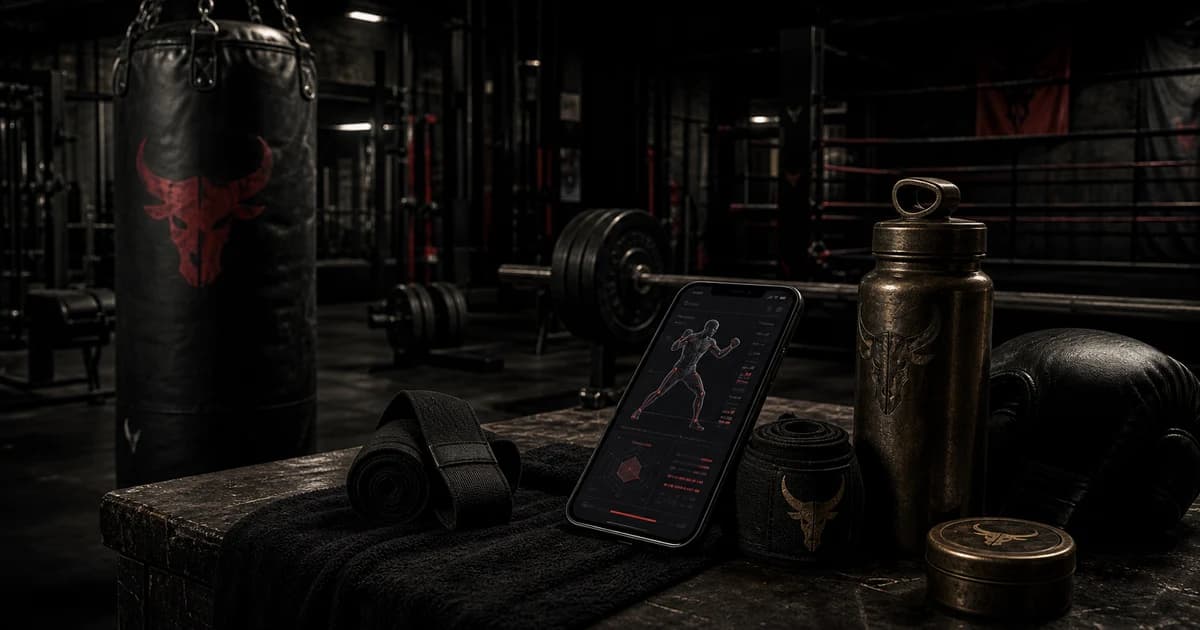
Boxing Strength Training App 2026: What Fighters Actually Need From Gym Work
Short answer: a boxing strength app should not turn a fighter into a generic lifter. It should build force, posture, durability, and repeatable power while protecting speed, footwork, shoulder health, and technical freshness.
Boxers lift for transfer. The goal is not to win the gym. The goal is to hit harder, stay balanced, keep the guard alive late in rounds, absorb training volume, and arrive at boxing sessions better prepared instead of cooked. That is a different product problem from a general workout tracker.
Sources checked
- National Strength and Conditioning Association
- NSCA position statements
- American Council on Exercise program basics
- USA Boxing
The four jobs of a boxing strength app
| Job | What it means | Bad app behavior |
|---|---|---|
| Build force | Legs, trunk, pulling, pressing, carries | Random bodybuilding split |
| Protect movement | Hips, ankles, thoracic spine, shoulders | No mobility or warm-up logic |
| Manage fatigue | Gym work fits boxing week | Max effort before sparring |
| Create transfer | Strength shows up in rounds | Bigger numbers, worse boxing |
If an app cannot see the boxing week, it cannot program the gym week intelligently.
Gym work should support the jab
The jab is a brutal truth detector. If gym work makes the shoulder heavy, the front foot lazy, or the hand slow to return, the program is not helping yet. A useful app should track how strength work affects simple boxing qualities: stance, guard return, hip timing, balance after punching, and breathing under volume.
This is where Titans Grip should be different. The app is not just counting sets. It is connecting gym work to boxing cues.
The beginner template
For most beginners, two gym sessions per week are enough. Keep them short and repeatable:
- Lower-body strength: squat, split squat, hinge, or sled pattern.
- Upper-body pull: row, pull-up variation, cable pull.
- Upper-body press: push-up, landmine press, dumbbell press.
- Trunk: anti-rotation, carries, bracing.
- Mobility: hips, ankles, t-spine, shoulders.
The app should progress slowly. A beginner who cannot shadowbox cleanly after lifting is not undertrained. They are mismanaged.
The intermediate template
Intermediate boxers need phases. A base block builds tissue tolerance and strength. A power block shifts toward speed, jumps, throws, lighter loads, and sharper intent. A deload protects skill. A pre-fight block reduces gym noise so boxing quality rises.
The best app does not ask "how sore are you?" as a cute wellness check. It asks what matters: did your jab slow down, did your legs feel flat, did your guard drop, did you recover between rounds, did shoulder irritation appear?
Video feedback beats memory
Fighters are unreliable witnesses under fatigue. They think the guard came back. The clip says otherwise. They think the stance stayed narrow. The clip says otherwise. They think the punch stayed clean after round four. The clip says otherwise.
A boxing strength app should let video feedback influence training priorities. If the rear hand drops after power work, the next gym block needs shoulder endurance and trunk discipline, not just heavier pressing. If balance collapses after a jab-cross, the app should not celebrate a deadlift PR as if transfer is guaranteed.
The scoring model
A useful score is decomposed. For boxing, one number is not enough. Break it into:
- Stance stability.
- Punch path.
- Guard return.
- Hip timing.
- Balance after the shot.
- Fatigue drift.
For gym work, score range of motion, tempo, bracing, control, and recovery effect. Then give one priority cue. Not ten. One.
What the app should avoid
Avoid random daily workouts, endless novelty, ego lifting, and conditioning that ruins boxing practice. Avoid features that reward streaks while ignoring quality. Avoid programs that treat every athlete as a blank fitness avatar.
Boxing is specific. The app should respect the ring, the bag, the coach, and the athlete's nervous system.
Where Titans Grip fits
Titans Grip should be the bridge between gym structure and fight-sport feedback. It should help a boxer know what to lift, when to back off, what technical cue matters today, and whether strength is transferring into sharper rounds.
Read next: /blog/best-boxing-gym-app-2026, /blog/boxing-form-analysis-app, and /boxing.
Train Boxing with AI
Coach Marcus analyzes your technique, scores your form 0-100, and builds your training plan.
Download Boxing AIFAQ
Should boxers lift heavy?
Sometimes. Heavy lifting can help, but it must fit the boxing week and should not damage speed or skill quality.
How many gym sessions should a boxer do?
Many beginners do well with two focused sessions. Advanced athletes need phase-based planning.
What should a boxing app track?
Training load, video cues, fatigue, guard return, stance quality, punch transfer, and recovery.
Is AI useful for boxing training?
Yes, if it produces clear cues and respects the athlete's program. No, if it just generates random workouts.
Coach Marcus
Boxing specialist. Expert in footwork, combinations, defense.
Coach Marcus is the AI coaching persona behind Boxing AI, built to provide personalized boxing guidance through video analysis, training plans, and technique breakdowns.
Related Articles
Best Boxing and Gym App 2026: Video Form Checks, Strength Logs and Fight-Ready Conditioning
May 27, 2026 · 7 min read
BoxingAnalyse IA du sparring boxe : lire le combat en vidéo
May 15, 2026 · 3 min read
Boxing7 Common Jab Mistakes That Hold Boxers Back (and How to Fix Them)
Apr 30, 2026 · 5 min read
Train Boxing with AI
Boxing AI gives you an AI coach that analyzes your technique, plans your training, and tracks your nutrition. Try it for free.