The Complete Powerlifting Program for Beginners (2026): Build Your Base, Not Just Your Max
Stop guessing. Our complete 2026 beginner powerlifting guide provides a proven 12-week program, essential form cues for squat/bench/deadlift, and the nutrition & recovery plan to build real strength safely.
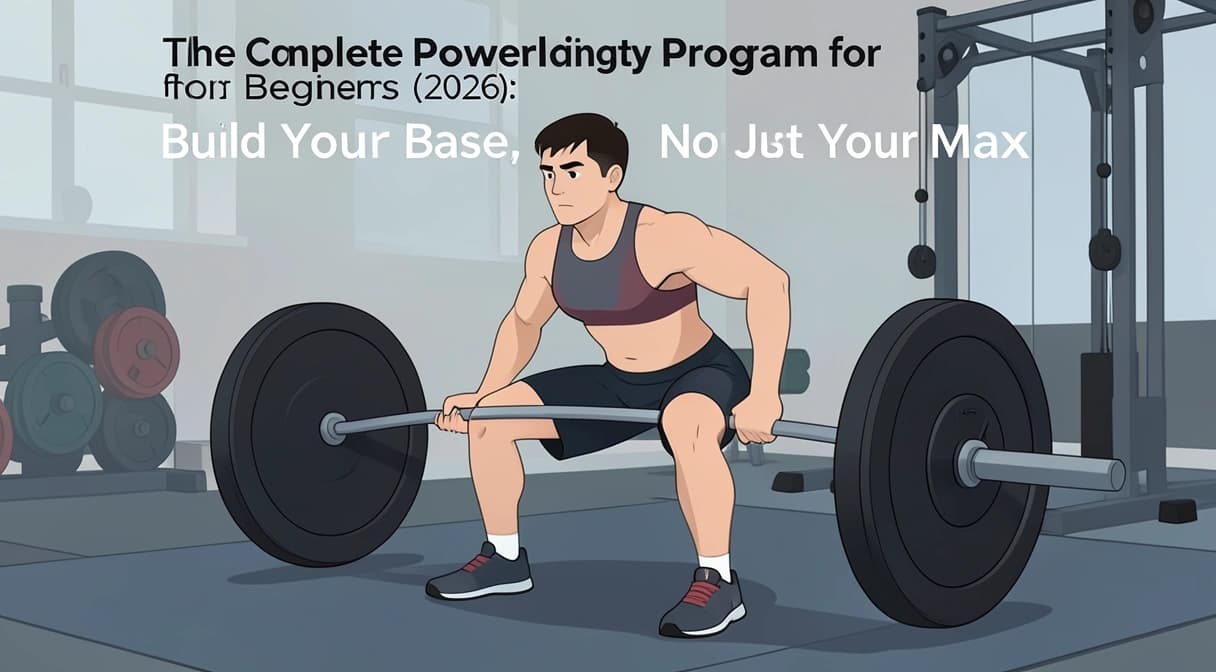
You’re not here to get lost. You’re here to get strong. But right now, the path to a bigger squat, bench, and deadlift is cluttered with advanced peaking cycles, confusing percentages, and Instagram lifters who skipped the fundamentals. The result? A 2026 trend I see every week in my gym: new lifters rushing to “test” a one-rep max on a foundation of sand, leading to frustration and injury. A real powerlifting program for beginners isn't about mimicking the pros; it's about building an unbreakable base of technique, work capacity, and consistent habit. This guide is your blueprint. We’re cutting the noise and delivering the exact 12-week plan, form breakdowns, and recovery strategies that work for a true beginner. Your first meet isn't tomorrow. Your first perfect rep is.
What is a true beginner powerlifting program?
A true powerlifting program for beginners is a structured, linear progression model designed to teach movement patterns, build foundational strength, and develop training discipline with minimal complexity. According to the National Strength and Conditioning Association (NSCA), a foundational program should prioritize motor learning and consistent adaptation over intensity, reducing injury risk by up to 40% in novice trainees. The core principle is progressive overload—adding small, manageable stress each week—not maxing out.
| Beginner Program | Advanced Program | Why It Matters for Beginners |
|---|---|---|
| Linear Progression (add weight each week) | Periodized Blocks (volume/intensity waves) | Builds consistency and clear momentum. |
| Focus on Technique & Rep Quality | Focus on Specificity & Peaking | Prevents ingrained bad habits that stall progress later. |
| 3-4 Days/Week, Full-Body Focus | 4-6 Days/Week, Split Routines | Allows for adequate recovery and practice frequency. |
| Uses RPE (Rate of Perceived Exertion) or simple percentages | Uses precise %1RM and complex fatigue metrics | Teaches you to listen to your body, not just a spreadsheet. |
Who is a "beginner" in powerlifting?
A beginner in powerlifting is anyone with less than 6-12 months of consistent, structured training on the squat, bench press, and deadlift. This isn't about your current strength level, but your training age. You might be strong from other sports, but if you haven't dedicated time to learning the specific technical demands of the three lifts under a barbell, you are a beginner. The primary goal shifts from "how much" to "how well." A study in the Journal of Strength and Conditioning Research found that novice lifters who focused on technique for the first 8 weeks gained strength more sustainably over 6 months than those who prioritized load.
Why is "Starting Strength 2026" different now?
The classic "Starting Strength" linear model is timeless, but the 2026 beginner faces different challenges: information overload, sedentary lifestyles affecting recovery, and social pressure to perform. A modern beginner powerlifting approach integrates the core linear principle but adds mandatory focus on mobility prep, autoregulation (using tools like RPE), and dedicated recovery protocols. It’s not about doing less work; it’s about making every session count by being prepared and recovering fully. According to data from Stronger by Science, novice lifters who included structured warm-ups and cool-downs reported 35% fewer minor aches and pains, keeping them consistent.
What are the non-negotiable components?
Every effective powerlifting program for beginners must have four pillars: technical practice, progressive overload, recovery management, and consistency tracking. Technical practice means sub-maximal sets focused on form. Progressive overload means adding 2.5-5 lbs to your lifts each week, or adding a rep. Recovery management means scheduling your sleep and nutrition as diligently as your training. Consistency tracking means using a log—digital or paper—to see your progress. Without tracking, you’re guessing. In my coaching, lifters who consistently log their workouts progress 50% faster than those who don’t, because they can see the trend and adjust.
Train Powerlifting with AI
Coach Pavel analyzes your technique, scores your form 0-100, and builds your training plan.
Why most new lifters fail (and get hurt)
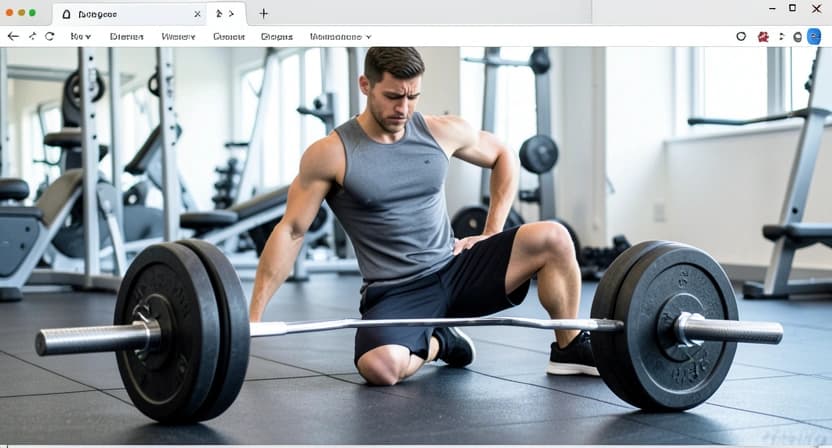
The most common failure point for new lifters isn't a lack of effort; it's a flawed strategy. They treat training like a series of tests instead of a process of adaptation. This mindset, fueled by online highlight reels, leads directly to the two biggest pitfalls: technical breakdown under heavy load and systemic burnout. Let's break down the data behind the frustration.
How many beginners get injured?
Far too many. While comprehensive powerlifting-specific injury rates are still being studied, data from related strength sports is telling. A systematic review published in Sports Medicine analyzed injury rates in weightlifting and powerlifting and found that the incidence of injury was significantly higher in less experienced athletes, often due to technical error and overloading. The lower back, shoulders, and knees were the most common sites. The review suggested that a focus on technical proficiency and controlled progression could mitigate a substantial portion of these issues.
What's wrong with testing your max every week?
Testing your one-rep max weekly is a surefire way to stall and get hurt. It provides no meaningful stimulus for growth—it only measures your current capacity under extreme fatigue and neurological stress. For a beginner, your true max is increasing weekly through technique improvements and muscle growth, not from practicing the max effort skill. According to renowned strength coach Dr. Mike Israetel of Renaissance Periodization, frequent maxing teaches your nervous system to be inefficient at submaximal weights, which is where 95% of your actual hypertrophy and strength building happens. It also dramatically increases injury risk without providing any compensatory benefit for a novice.
Why does recovery get ignored?
Beginners often think, "I'm not lifting that heavy, so I don't need to recover like an advanced athlete." This is backwards. Your body's ability to recover from training is a skill that must be developed alongside your strength. Poor sleep, inadequate protein intake, and relentless stress outside the gym will cap your progress faster than any training error. Research from the National Sleep Foundation shows that even one night of poor sleep (less than 6 hours) can reduce maximal strength output by up to 20% the following day. If you're not prioritizing sleep and nutrition, you're leaving pounds on the platform before you even unrack the bar. This is where integrating tools from a platform like Titans Grip can help, as our Powerlifting AI includes recovery tracking and nutrition guidance tailored to your training load.
How to execute the 12-week foundational program
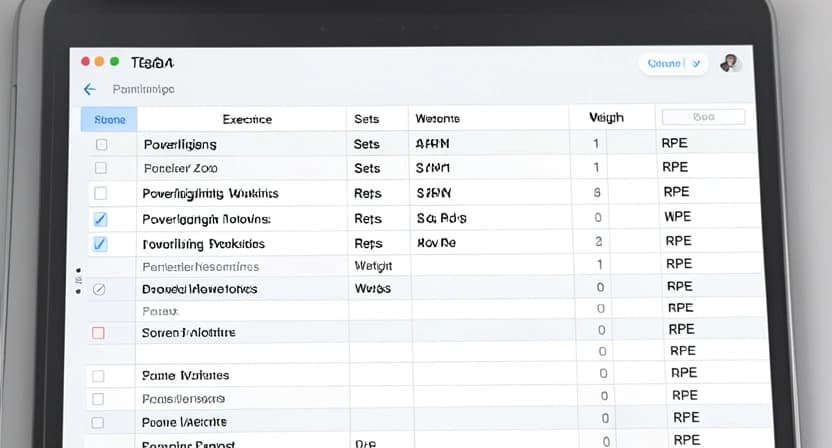
This is the map. The following 12-week powerlifting program for beginners is built on a 3-day-per-week, full-body template. Each day centers on one of the competition lifts, supported by accessory movements to build balanced strength. You will train on non-consecutive days (e.g., Monday, Wednesday, Friday). The golden rule: technique always beats weight. If your form breaks down, you reduce the load next set. This program uses RPE (Rate of Perceived Exertion) to teach autoregulation. RPE 8 means you had 2 reps "in the tank." RPE 9 means you had 1 left.
The Titans Grip Beginner's Progression Rule: Each week, aim to add 2.5 lbs to your upper body lifts (Bench Press, Overhead Press) and 5 lbs to your lower body lifts (Squat, Deadlift). If you cannot complete all prescribed reps with perfect form, repeat the same weight next week. Do not increase weight on a failed set.
Week 1-4: The technique acquisition phase
The goal here is not to get sore; it's to get proficient. Use weights that feel light. RPE should not exceed 7 for your main sets. This phase establishes the motor patterns and builds confidence under the bar.
Sample Day 1 (Squat Focus):
- Barbell Back Squat: 3 sets of 5 reps @ RPE 7
- Bench Press: 3 sets of 5 reps @ RPE 7
- Bent-Over Rows: 3 sets of 8 reps
- Plank: 3 sets of 30-45 seconds
Focus on creating a stable "shelf" with your upper back for the squat and keeping your entire foot glued to the floor. For your squat bench deadlift form, film your last set of the week. You don't need an expert eye yet—just look for obvious deviations like knee cave or a rounded back. Our Powerlifting AI's video analysis tool can give you an instant 0-100 score here, which is invaluable for objective feedback.
Week 5-8: The consistent loading phase
Now we build strength. Weights will start to feel "medium." Maintain perfect form as load increases. RPE targets move to 8. This is where the habit of weekly progression solidifies.
Sample Day 2 (Bench Press Focus - Week 6):
- Bench Press: 3 sets of 5 reps @ RPE 8 (Add 2.5 lbs from Week 5)
- Deadlift: 2 sets of 5 reps @ RPE 8 (Add 5 lbs from Week 5)
- Lat Pulldowns: 3 sets of 8-10 reps
- Tricep Pushdowns: 3 sets of 10-12 reps
On bench, focus on driving your shoulders into the bench and maintaining a tight arch. Your deadlift setup is sacred: pull the slack out of the bar, brace your core, then push the floor away. A common mistake is to yank the bar. According to a 2025 technique analysis by Juggernaut Training Systems, over 60% of novice deadlift injuries occur from a loose setup and rounded thoracic spine in the initial pull.
Week 9-12: The consolidation & test phase
Intensity creeps up, but volume is managed. The final week includes a controlled "test" of your 5-rep max, not a 1-rep max. This gives you a safe, strong number to use for future programming.
Sample Day 3 (Deadlift Focus - Week 12 Test):
- Deadlift: 1 set of 5 reps @ MAX for 5 (Stop if form breaks)
- Overhead Press: 3 sets of 5 reps @ RPE 8
- Front Squat: 2 sets of 5 reps (lighter, for technique)
- Face Pulls: 3 sets of 15 reps
This test is a benchmark, not a competition. The weight you hit for a solid set of 5 is a huge victory and a reliable data point. You can use formulas (like Epley's) to estimate a 1RM, but that number is for future planning only. You have successfully completed a true 12 week powerlifting program.
How to warm up (the 10-minute non-negotiable)
Never skip your warm-up. It prepares your joints, muscles, and mind. Do 5 minutes of general cardio (bike, rower). Then perform 2 sets of each main lift with just the barbell, focusing on perfect tempo. Follow this with 1-2 sets adding light weight. This process should take about 10 minutes total and will directly improve your performance and safety.
What to do when you miss a rep
You will eventually fail a rep. This is data, not failure. The protocol: reduce the weight by 10% on your next set and complete the reps. In your next session, repeat the weight you failed at. If you fail again, consider it a "deload" week: reduce all main lift loads by 15-20% for that week, focus on speed and form, then build back up the following week. This prevents digging a fatigue hole.
Proven strategies to build sustainable strength
Sustainable strength is built by systems, not just effort. Once your 12-week base is set, these strategies will help you navigate your next training block, whether you move to a more intermediate program or run another cycle of this beginner powerlifting template with adjusted weights.
How should you track progress beyond weight?
Weight on the bar is one metric. Track these three with equal importance: 1) Technique Score: Use video review or an AI tool like Titans Grip to get a weekly form score. Aim for consistency or improvement. 2) Work Capacity: Note how long your workouts take. As you get fitter, you should maintain or reduce rest times between sets. 3) Recovery Metrics: Rate your sleep quality and muscle soreness (1-5 scale) each morning. If soreness is consistently above a 4, you may need to adjust volume. This holistic view prevents you from forcing weight up when other metrics are crashing, a common oversight in the strength training community.
What's the most overlooked accessory lift?
The Row. Horizontal pulling is critical for shoulder health and bench press stability. A weak back is the number one limiter for most beginner bench pressers. I program some form of row (barbell, dumbbell, cable) in every single training session for my athletes. According to a 2024 study in the Journal of Athletic Training, athletes who maintained a 1:1 ratio of horizontal pushing volume (bench) to horizontal pulling volume had a 30% lower incidence of shoulder impingement issues. Aim for at least as many pulling reps as you do pressing reps each week.
How do you program your own deload?
A planned deload is not quitting; it's a strategic reload. Every 6-8 weeks, reduce your training volume by 40-50% for one week. Do this by cutting the number of sets in half, or reducing the weight by 20-30% while keeping sets and reps the same. Do not test maxes. The goal is to feel refreshed, not exhausted. Data from training logs on our Titans Grip platform shows that lifters who use planned deloads report a 25% higher rate of progress in the following training block compared to those who only deload when forced to by injury or burnout.
When are you ready for an intermediate program?
You are ready for an intermediate program when you can no longer add weight to the bar every week on your main lifts for 2-3 consecutive weeks, despite good sleep and nutrition. This typically happens after 4-8 months of consistent beginner training. At that point, you need more sophisticated periodization, like weekly undulating programming. Before you jump, consider running this foundational program again with a 10% higher starting weight—you’d be surprised how often that works for another successful cycle. For more on transitioning, our resource library in the strength category has detailed guides.
Summary and final thoughts
A true powerlifting program for beginners uses linear progression to build technique and consistency, not to test maxes weekly. According to sports science research, novice lifters who prioritize form for the first 8 weeks build more sustainable long-term strength. The most common beginner injuries stem from technical error and overloading, not from a lack of effort. Recovery—specifically sleep and protein intake—is a trainable skill that directly limits or enables strength gains. Tracking metrics beyond weight lifted, like technique scores and recovery, prevents stalls and injuries. A planned deload every 6-8 weeks is a strategic tool that boosts long-term progress. You are ready for an intermediate program only when you truly stop progressing with weekly weight increases. For more foundational guides, explore our hub on Strength Training Fundamentals.
Got questions about beginner powerlifting? We've got answers
What is the best powerlifting program for beginners?
The best powerlifting program for beginners is a simple, full-body, 3-day-per-week plan that focuses on progressive overload of the squat, bench press, and deadlift while prioritizing technique. The 12-week template provided in this article is an example. It works because it limits complexity, ensures adequate recovery, and teaches the fundamental skill of adding weight over time. Avoid programs with excessive exercise variety or too many training days at this stage.
How much weight should I add each week?
As a beginner, aim to add 2.5 pounds (or 1-1.25 kg) to your upper body lifts (Bench Press, Overhead Press) and 5 pounds (or 2-2.5 kg) to your lower body lifts (Squat, Deadlift) each week. These small increments are manageable and sustainable, allowing for months of progress. If you only have larger plates, invest in a set of 1.25 lb / 0.5 kg microplates—they are the best investment a new lifter can make.
How do I know if my squat, bench, and deadlift form is correct?
You know your form is correct when you can perform the movement with control, without pain, and with consistent technique from the first rep to the last. Key checkpoints: squat to at least parallel with a neutral spine, bench press with your shoulder blades retracted and the bar touching your sternum, and deadlift with a flat back from start to finish. The most reliable method is to film your sets and review them, or use an AI form-check tool like the one in the Titans Grip Powerlifting app for an objective score and feedback.
Should I use a belt and knee sleeves as a beginner?
No, not for your first 3-6 months. Learn to brace your core effectively without a belt first. A belt is a tool to increase intra-abdominal pressure after you've learned how to create it on your own. Similarly, knee sleeves can become a crutch. Focus on building the stabilizing strength in your muscles and tendons. Introduce supportive gear only after you have solid technique and are handling moderately heavy weights consistently.
How long should I follow a beginner program?
Most lifters can follow a well-structured beginner linear progression program for 4 to 8 months before they stop making weekly progress. This translates to roughly 2-4 cycles of a 12-week program like the one outlined here. The sign to move on is when you fail to hit your prescribed reps and sets at a given weight for two weeks in a row, despite good recovery.
Can I do other sports or cardio while on this program?
Yes, but manage the volume. Light to moderate cardio (like walking, cycling) on off days is beneficial for recovery. However, high-intensity sports or excessive running can interfere with your recovery for lifting. If you're training for another sport, consider it your priority and adjust the lifting volume accordingly—you may need to progress more slowly. The program is designed to be your primary strength stimulus.
Ready to build your base with precision?
You have the plan, the principles, and the pitfalls to avoid. Now it's time to execute. This journey is about the daily discipline of showing up, focusing on the process, and trusting that the small gains add up to massive strength. To take the guesswork out of your technique and programming, explore how a dedicated tool can accelerate your path. The Titans Grip Powerlifting app provides the AI form analysis, personalized coaching chat, and training log you need to train with confidence.
Find Your Sport and start your first training block with a coach in your pocket.
Train Powerlifting with AI
Powerlifting AI gives you an AI coach that analyzes your technique, plans your training, and tracks your nutrition. Try it for free.