Muay Thai Pad Round Video Review Checklist 2026
A repeatable checklist for filming one Muay Thai pad-round sequence and reviewing stance, guard, distance, return, and reset.
Answer first
Use this checklist to review one pad-round sequence without turning one camera angle into a verdict. Keep the official IFMA rules and regulations beside the rules your coach or event uses. Muay Thai AI: Kru Coach can review recorded Muay Thai clips with technique feedback and a training log, so you can bring one clear question to your coach.
Before you record
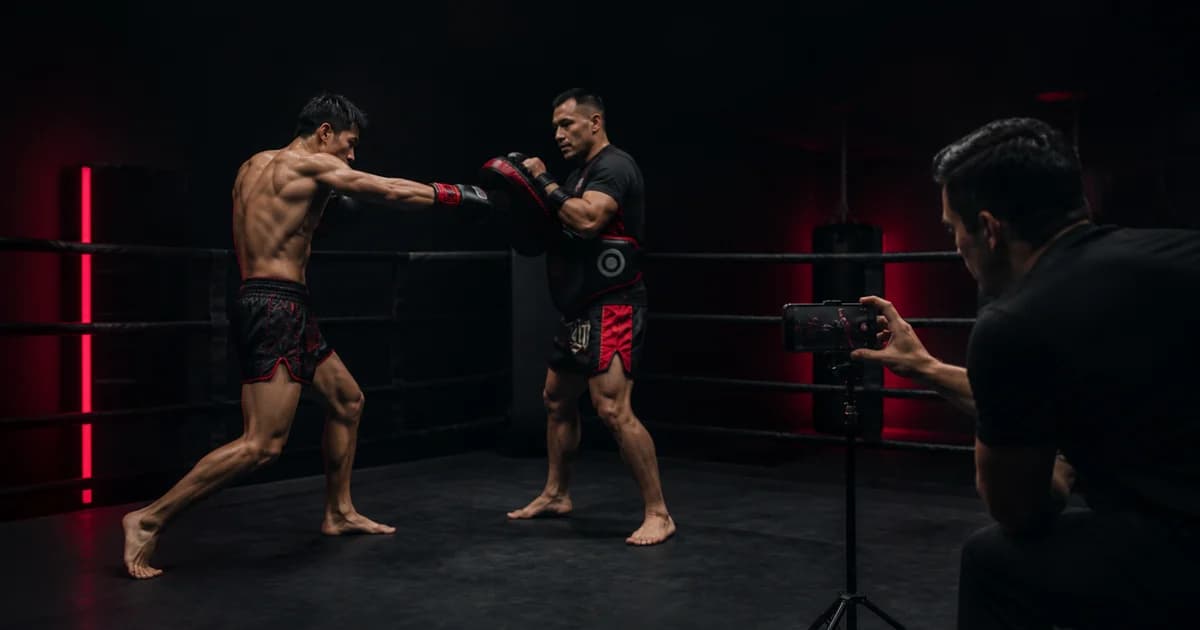
Clear the floor, use good lighting, and place the phone on a stable support outside the movement path. Record one controlled pad-round sequence from an angle that keeps the full action, feet, target, and reset visible. Ask anyone on camera before you record and keep the drill controlled.
Five visible checkpoints
- Stance: Keep both feet and the starting guard visible before the pad call.
- Distance: Check whether the athlete reaches the pad without leaning or stepping late.
- Technique line: Follow the kick, knee, elbow, or teep path from setup to target.
- Guard return: Watch the hands and supporting foot as the technique comes back.
- Reset: Confirm a balanced stance before the next pad call.
Turn the clip into the next drill
Watch the full clip once at normal speed. On the second pass, find the first visible change in one pad-round sequence, write one neutral observation, and choose one smaller repetition for the next block. Keep the camera mark, starting position, partner role, and intensity consistent. When style, contact, tactics, or rules change the answer, take the clip to your coach.
Put the checklist into your next session
After the session, open Muay Thai AI: Kru Coach. The product page describes recorded-video review with technique feedback for kicks, knees, elbows, teeps, and clinch, a log for pad rounds, bag work, sparring, and roadwork, plus competition planning. Import one controlled pad-round sequence, review one checkpoint, and save one concrete cue in the training log. Bring that cue to your next coaching conversation.
Train Muay Thai with AI
Kru Somchai checks your technique on video and builds your training plan.
Download Muay Thai AIPrimary source and app link
Use the IFMA rules and regulations for published rules and technical context. Read the current Muay Thai AI: Kru Coach description, then open the Muay Thai AI: Kru Coach landing page to start a logged review. The combat-sport hub keeps this checklist in context.
A good review answers one visible question and creates one next repetition. Use the checklist with Muay Thai AI: Kru Coach, then let your coach interpret what the camera cannot show.
Film a repeatable pad sequence
Choose one sequence that you can repeat at controlled intensity. A useful example is jab, rear round kick, return to guard, then reset. Mark the starting feet, place the phone about 45 degrees to the side, and keep both athletes, the full target, and the recovery step in frame. Record three takes with the same pad distance. Ask the holder to call the same targets and keep the rhythm steady. Do not turn the round into a power test while you are trying to compare technique.
Write one question beside the file before you start. For a teep, ask whether the knee recoils before the foot returns and whether your chest stays stacked over your base. For a rear kick, check the support-foot turn, hip rotation, opposite-hand guard, and the first step after contact. For a knee from clinch, use a wide angle that shows posture, hand position, balance, and the moment you release. For an elbow, record the exit as well as the strike so you can see whether the guard returns before you move away.
Compare two pad rounds by checkpoint
Watch both clips once at normal speed, then slow only the first visible change. Use the same order every time: starting stance, distance, technique path, contact, guard return, and reset. A faster clip is not automatically better. Check whether the athlete reaches the pad without leaning, keeps the supporting foot stable, and returns to a usable stance before the next call. Keep the holder, target height, camera mark, and round length consistent.
| Pad example | Visible question | Next test |
|---|---|---|
| Teep and return | Does the knee recoil before the foot lands? | Lower speed and hold the chamber briefly |
| Rear kick to the body pad | Do support foot and hip turn together? | Reduce power and repeat the same target |
| Clinch knee | Does posture stay tall through contact? | Use a lighter call and pause before release |
| Elbow and exit | Does the guard return before the angle step? | Repeat the exit without a partner first |
Choose the next training decision
Pick one correction after the review. If the same problem appears in two comparable clips, reduce speed or power and test the change for a full round. If the feet disappear from frame, move the phone before changing the technique. If the strike looks clean but the pad holder reports unstable contact, ask your coach to check timing and target distance. Save the clip, the neutral observation, and one cue in the training log. Muay Thai AI: Kru Coach can organize the recorded review, while your coach decides how the cue fits your style, partner work, and event rules.
What the camera cannot decide
The phone cannot judge whether contact was appropriate, whether a partner felt safe, or whether a variation belongs in hard sparring. Stop when control drops. Bring both clips to your coach, explain the one change you tested, and ask for one next pad call. That keeps the review useful without treating an automated observation as a final coaching decision.
Try these free tools
Train Muay Thai with AI
Muay Thai AI reviews your technique, helps plan training, and tracks nutrition. Download it free, then check the App Store for current paid access.