
Song Yadong vs Deiveson Figueiredo: Bantamweight Stance Analysis
Break down the Song Yadong vs Deiveson Figueiredo stance battle: lead-hand control, pressure entries, counter windows, and what to film in your own sparring.
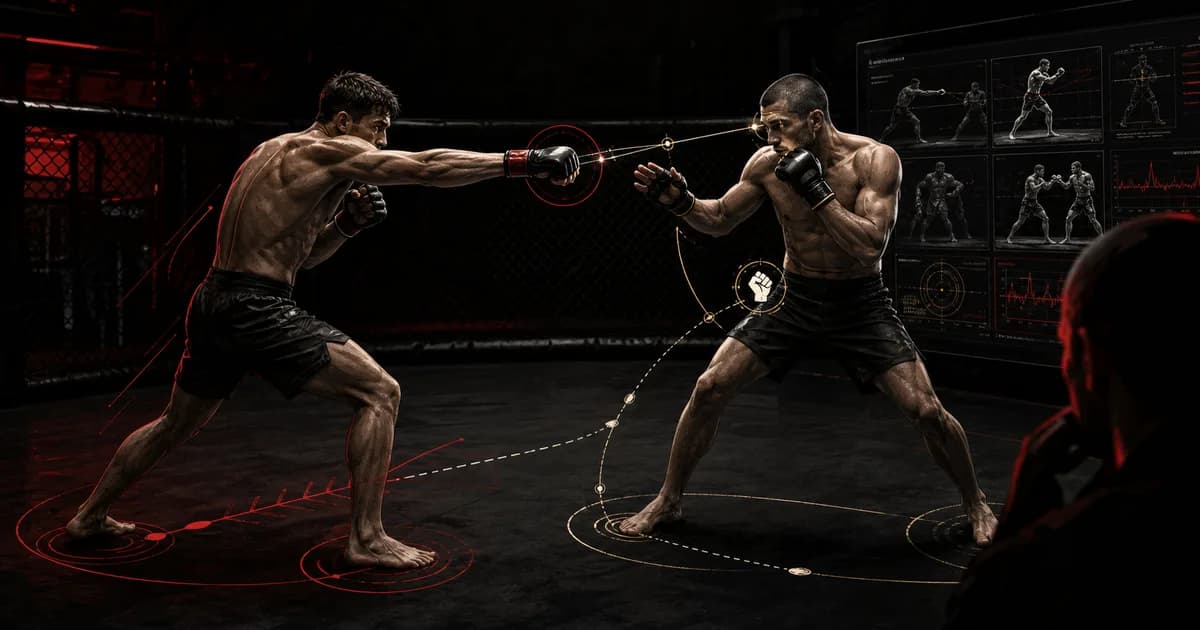
Song Yadong vs Deiveson Figueiredo is a useful study because it is not just a matchup of names. It is a stance problem. One athlete pressures behind fast boxing entries. The other spent a career making entries expensive with timing, power, and veteran reads.
According to the UFC event page, the fight headlined UFC Macao on May 30, 2026 at Galaxy Arena, and Song Yadong won by submission at 4:42 of round 2 with a Performance of the Night bonus. The Song Yadong and Deiveson Figueiredo athlete pages give enough context to frame the analysis without inventing tape claims. The goal here is not to relitigate the scorecard. It is to pull one training lesson for boxers and MMA athletes: how do you enter safely when your opponent waits to counter?
Key takeaways
- This is not a prediction article. It is a stance and entry map for you if you study pressure boxing in MMA.
- Song's useful lesson is pressure without reaching: win the lead-hand line before stepping into range.
- Figueiredo's useful lesson is counter-power discipline: make the entry pay, then leave before the second layer arrives.
- The sparring metric is simple: count the first step after every jab entry and every counter attempt.
Why does fight-week analysis need a drill attached?
Fight-week analysis needs a drill attached because attention fades on Monday and habits do not. When we planned this brief, the search terms athletes actually use sat next to broad training queries like boxing workout, which told us readers want something to practise, not a scorecard. So every idea below ends in a rep: lead-hand control, first step, counter exit, cage angle, and guard recovery.
The lead-hand line
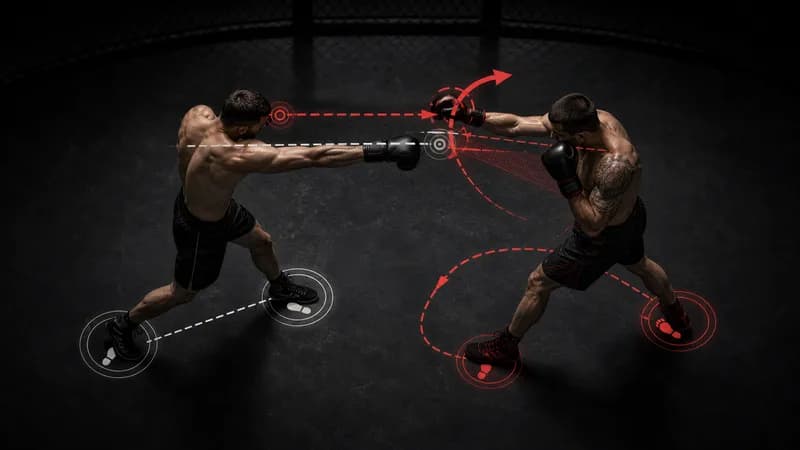
The lead-hand line is the invisible boundary both athletes fight over before anyone steps in. In orthodox-vs-orthodox exchanges, the lead hand is not decoration. It is a rangefinder, shield, frame, and trigger. The pressure fighter wants to touch, blind, and step. The counter fighter wants to make the touch predictable, draw the step, and fire into the entry. If the pressure athlete reaches with the head over the front foot, the counter window opens.
Song's training lesson is controlled pressure: jab without falling, step without crossing, and reset before the second exchange becomes wild. Figueiredo's lesson is counter discipline: do not chase every feint; punish the entry that breaks posture.
The practical workflow
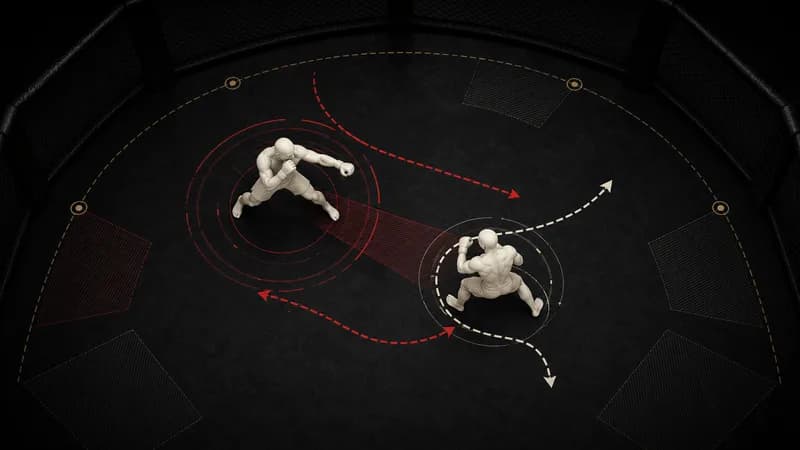
The practical workflow is three filmed sparring rounds and one tag per jab entry. Film three sparring rounds. Tag every jab entry. For each one, write the first step after the jab: hold, step left, step right, exit back, crash, or pivot. Then tag every counter attempt. Did it happen because the entry was predictable, because the rear hand dropped, or because the feet squared up?
For boxing athletes, run this as a ring drill: jab touch, outside step, rear-hand guard glued, exit on angle. For MMA athletes, add the cage line: if the opponent circles, cut; if they plant, feint; if they counter, exit before admiring the shot.
Common mistakes
The common mistake is watching highlights and copying the finish. For example, a round-2 submission gets replayed a thousand times while the stance error that made it available gets replayed never. The useful information happens before the finish: the foot that got outside, the shoulder that froze the counter, the hand that returned late, the stance that narrowed under pressure. A fighter does not lose position all at once. The stance leaks first.
How Titans Grip athletes should use it
In Titans Grip, review sparring around one question: did the entry keep the stance? If yes, build volume. If no, slow the drill down. The app should help athletes see the repeated leak, not hand them a fantasy score.
Film one set or one round, tag the constraint, and review it like a coach instead of guessing.
How do you enter against a counter-puncher?
You enter against a counter-puncher by making the entry boring before you make it fast. Touch the glove, step off centre, come back, touch again. A counter fighter feeds on rhythm, so the athlete who enters on the same beat twice is choosing to get hit. Change the beat, not the technique.
Set the drill with a partner who is only allowed to counter, never to lead. You enter ten times. They score any entry where your head finishes over your front foot. Losing this drill badly is normal for a week or two; winning it means your entries survive real rounds.
What does a stance leak look like on film?
A stance leak looks like a base that narrows a little on every exchange until the feet are in a line. You will not see it in one clip. You see it by pausing at the end of each exchange in a round and looking only at the feet. Round one they are under the hips. By round three the rear foot has crept forward and the counter that lands looks like bad luck.
When I review sparring with athletes, I mute the audio and scrub only the last frame of every exchange. It takes a few minutes per round and it finds more than watching the whole thing at speed.
How should you rebuild the guard after an exchange?
You rebuild the guard on the way out, not once you are safe. The rear hand comes back before the last punch has landed, and the lead elbow drops to the ribs during the pivot rather than after it. Athletes who wait until they are out of range have already given up the window that punishes them.
Grade one round on that alone. For every exchange, mark whether your hands were home before your feet stopped moving. Yes or no, nothing else. That single column will tell you more about your defence than a highlight reel ever will.
Sources checked
Every external source linked below was checked for a live HTTP response before publishing. public search-demand data is used as directional demand evidence, not as a claim of exact search volume.
- UFC Fight Night: Song vs Figueiredo event page
- Song Yadong athlete page
- Deiveson Figueiredo athlete page
- CBS Sports event listing
Put the main drill from this guide into practice with JabMaxx: Boxing Coach. Record one controlled attempt, review the movement feedback, and choose one correction for your next session.
Try these free tools
Train Boxing with AI
JabMaxx: Boxing Coach reviews your technique, helps plan training, and tracks nutrition. Download it free, then check the App Store for current paid access.