BJJ Guard Positions: A Practical Map From Closed Guard to Open Guard
Understand the jobs of closed, half, butterfly, collar-sleeve, De La Riva and seated guards, then choose one position to drill with your coach.
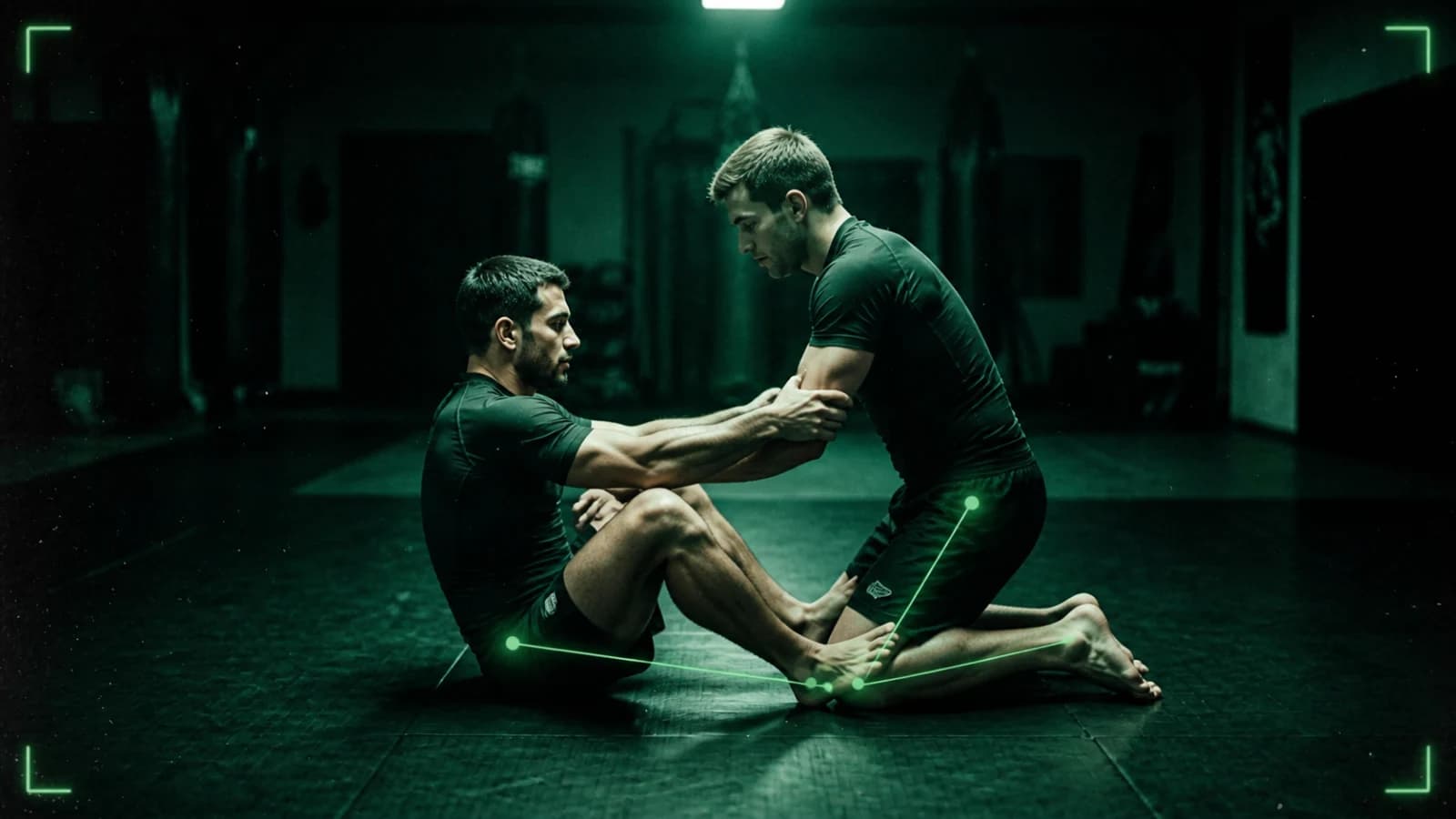
A BJJ guard is a bottom position in which you use your legs, hips, frames and grips to manage distance, protect yourself, off-balance the top player and create a sweep, submission or return to standing. Closed guard controls with the legs around the torso. Open guards use feet, hooks and frames. Half guard controls one of the top player’s legs. Butterfly guard uses inside hooks from a seated position.
Learn these positions with a qualified Brazilian jiu-jitsu coach and a cooperative partner. Agree on intensity, tap early and stop when a joint, neck or uncontrolled fall becomes unsafe.
Closed guard
In closed guard, the bottom athlete wraps both legs around the top athlete’s torso and crosses the feet behind the back. Control posture before you attack. Use grips, knees and hip movement to prevent the top player from sitting upright freely.
The position can support sweeps and submissions, but squeezing the legs without controlling posture usually wastes energy. Practise breaking posture, making an angle and returning to a safe frame when the guard opens.
Half guard
Half guard traps one of the top player’s legs between your legs. Build a frame at the shoulder or neck line as your coach teaches, protect the head-and-arm space and avoid staying flat under chest pressure.
Common families include knee-shield half guard, underhook half guard and deep half guard. They share the trapped leg, but their upper-body goals and risks differ. Learn one version before collecting names.
Butterfly guard
Sit upright with one or both insteps acting as hooks inside the top player’s thighs. Use grips and head position to connect the upper body to the hooks. A butterfly sweep works by taking balance away and elevating with the hook while your body turns, not by extending one leg against a stable opponent.
If you fall flat before creating an angle, the hooks lose useful range. Drill seated posture, forward connection and side-to-side off-balancing first.
Collar-sleeve guard
In the gi, collar-sleeve guard uses a collar grip, sleeve control and feet placed as frames or hooks. Keep the gripping structure connected to hip movement. Do not let the top player clear your feet while you continue pulling only with the arms.
Grip rules and uniform requirements vary by organization and division. Confirm the current ruleset before competition.
De La Riva guard
De La Riva guard uses an outside leg hook around the opponent’s lead leg, usually with controls at the ankle, sleeve, collar or belt depending on the ruleset. The other foot manages distance or the far leg.
Keep the knee and hook aligned. Do not force the hook when the top player turns the knee into an uncomfortable angle. Your coach should show safe entries and exits.
Seated open guard
Seated guard is a broad starting family rather than one fixed grip. Stay active through the feet and hands, protect the space between your knees and elbows and decide whether you want to wrestle up, enter butterfly hooks or connect to another open guard.
Sitting without contact gives the top player freedom to circle. Establish a grip, post or hook before you chase an attack.
| Guard | Main connection | First objective |
|---|---|---|
| Closed | Legs around torso | Control posture |
| Half | One trapped leg | Build frames and reach your side |
| Butterfly | Inside hooks | Off-balance before elevation |
| Collar-sleeve | Gi grips plus foot frames | Keep distance and angle |
| De La Riva | Outside leg hook | Control lead-leg movement |
| Seated | Hands, feet and head position | Establish contact before attack |
Choose one guard for your next month
Pick the guard you reach most often in live rounds. Define one retention goal, one sweep and one safe exit. Start positional rounds in that guard and reset when the top player passes or the bottom player completes the chosen goal.
Do not judge progress only by submissions. Better framing, fewer uncontrolled scrambles and a reliable return to position can show meaningful technical improvement.
Review one positional round in Grappling AI
Place the phone outside the mat at a low front-oblique angle that shows both athletes, hips, knees, feet and grips. Open Grappling AI with a clip you have permission to record. Use the video feedback to identify the first moment your frames, hooks or posture changed, choose one positional drill and confirm it with your coach.
Grappling AI cannot feel pressure, judge joint safety, supervise a tap or replace live coaching.
Competition context
The International Brazilian Jiu-Jitsu Federation rules publish current scoring, uniform and legal-technique material. Other organizations use different rules. Study the rules for your event and ask your coach how they affect grips, reaping positions and transitions.
Sources
Try these free tools
Train Grappling with AI
Get Grappling AI on Android. It reviews your technique, helps plan your training and tracks your nutrition.