Crowded Gym Workout Plan: The One-Station Method for Peak Hour Training
A practical crowded-gym workout system for peak hours: substitutions, one-station blocks, timing rules, and how to keep strength progress when every rack is taken.
Titans Grip
Combat and Strength Sports Coach, 15+ years coaching athletes
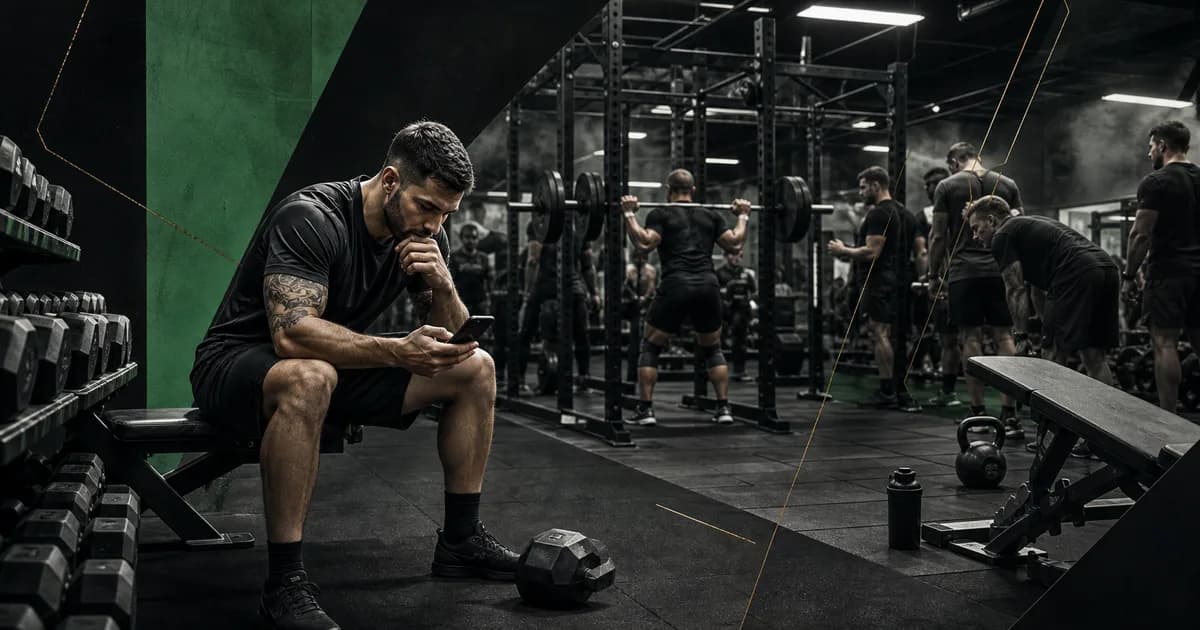
Peak-hour gyms are not a motivation problem. They are a logistics problem. When membership and facility visits rise, the athlete who waits for the perfect rack loses temperature, intent, and time. The athlete who has a substitution map keeps training.
The Health & Fitness Association reported record-scale U.S. facility participation, and its member workout data shows why evening floors feel overloaded. Pair that with the 2026 ACSM trend list, where mobile exercise apps and strength-oriented training remain central, and the content opportunity is obvious: people do not need another perfect program. They need a program that survives a full gym.
Key takeaways
- If the rack is taken, do not wait cold. Move to the closest pattern that preserves the training effect.
- One-station blocks beat gym wandering: choose one zone, one primary pattern, one accessory, and one density rule.
- The substitution must protect intent: heavy squat day, hypertrophy day, and conditioning day need different backups.
- Peak-hour training works best when you film one set and review movement quality after the session.
public search-demand data check
The live trend check used the public search-demand data comparison for strength training, boxing workout, and gym workout. I am not treating that as exact volume. I am using it as a directional sanity check: if broad gym and combat-training terms remain active while HFA reports more members and more visits, crowded-gym content is not theoretical. It answers a real floor problem.
The practical workflow
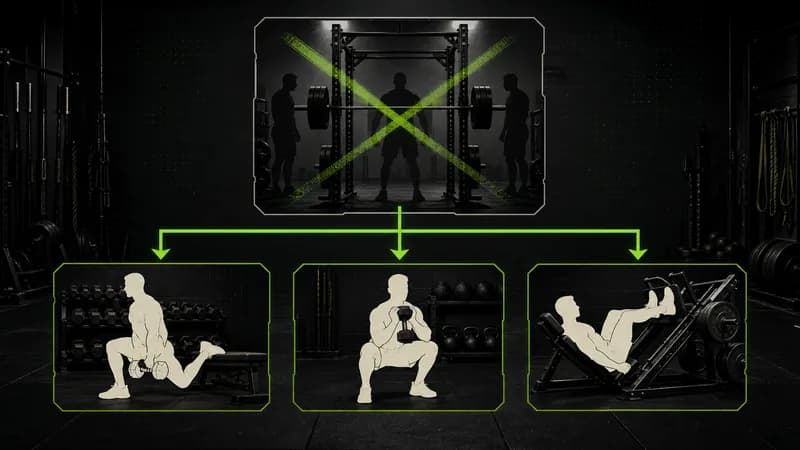
Start with intent, not equipment. If the plan says back squat for sets of five, the intent may be heavy knee-dominant strength, not religious loyalty to a rack. If the rack is taken, your first backup is front squat if a clean setup is available, then safety-bar or goblet squat, then Bulgarian split squat, then leg press with tempo. Each step preserves less specificity but keeps the session alive.
Use the one-station method:
- Pick the zone you can own for 12 to 18 minutes.
- Choose one main pattern.
- Pair it with one low-interference accessory.
- Set a density rule, such as every two minutes or controlled rest after breathing normalizes.
- Film the first hard set and the last hard set.
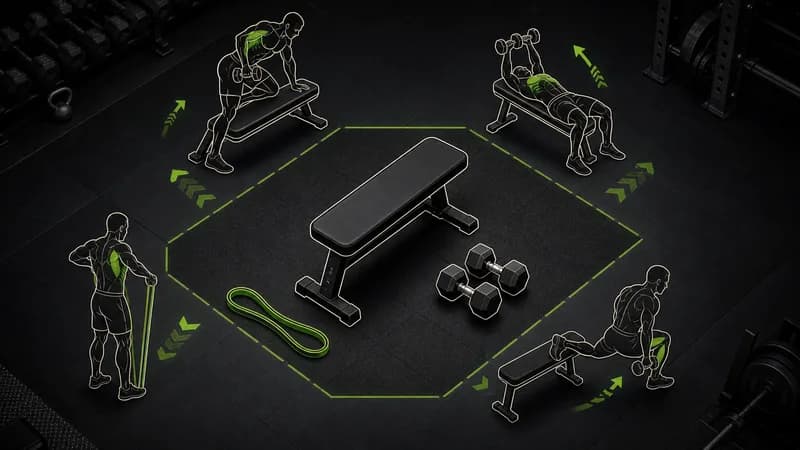
For upper body, a bench plus dumbbells can cover press, row, rear-delt, curl, triceps, and trunk bracing. For lower body, a single dumbbell can cover split squat, RDL, goblet squat, calf work, and loaded carries. The program is not perfect. It is complete enough to beat doing nothing while staring at a rack.
Common mistakes
The first mistake is waiting cold. Five minutes of waiting is not neutral; it changes readiness. If you wait, do low-fatigue mobility, warm-up sets, or the first accessory. The second mistake is substituting by ego. A dumbbell split squat can be brutally effective, but only if load, tempo, range, and proximity to failure match the day. The third mistake is turning every crowded session into conditioning. Density is a tool, not a punishment.
How Titans Grip athletes should use it
In Titans Grip, tag the constraint: rack taken, dumbbells only, bench only, cable only, floor space only. Then review the video by pattern. Did the knee track stay clean? Did the hinge stay loaded? Did the shoulder position collapse when fatigue hit? The point is not to worship the backup exercise. The point is to keep adaptation moving when the room is hostile.
Film one set or one round, tag the constraint, and review it like a coach instead of guessing.
Sources checked
Every external source linked below was checked for a live HTTP response before publishing. public search-demand data is used as directional demand evidence, not as a claim of exact search volume.
Coach Pavel
Powerlifting specialist. Expert in squat technique, bench press, deadlift.
Coach Pavel is the AI coaching persona behind Powerlifting AI, built to provide personalized powerlifting guidance through video analysis, training plans, and technique breakdowns.
Related Articles
Best Combat Sports AI Training App 2026: JAB AI vs Fight AI vs Kayyo vs Titans Grip — Which AI Coach Actually Works?
Jun 12, 2026 · 25 min read
PowerliftingStrength per Square Foot: The Small Gym Equipment Plan That Actually Works
May 24, 2026 · 4 min read
generalThe Sport BMI Calculator: Why Your Body Mass Index Is Lying
May 18, 2026 · 22 min read
Train Powerlifting with AI
Powerlifting AI gives you an AI coach that analyzes your technique, plans your training, and tracks your nutrition. Try it for free.