Strength per Square Foot: The Small Gym Equipment Plan That Actually Works
How to build a serious strength setup in a small gym: equipment order, spacing, safety lanes, and what to skip when floor space is limited.
Titans Grip
Combat and Strength Sports Coach, 15+ years coaching athletes
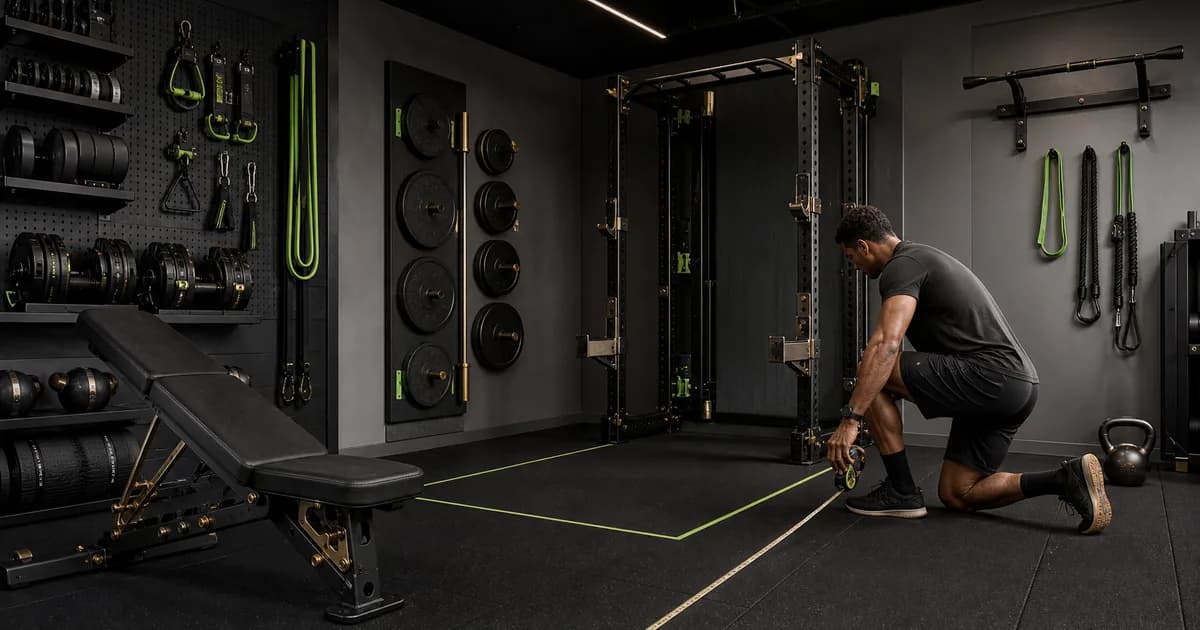
A small gym fails when every square foot is assigned to equipment and none is assigned to movement. The empty rectangle in the middle of the room is not wasted space. It is where the training happens.
NSCA facility guidance is useful because it treats setup as a safety and coaching problem, not an interior-design mood board. ACSM's 2026 trend list keeps strength, apps, and older-adult training in the conversation, which makes compact strength spaces more relevant: people want serious training that fits apartments, garages, spare rooms, and overfilled commercial corners.
Key takeaways
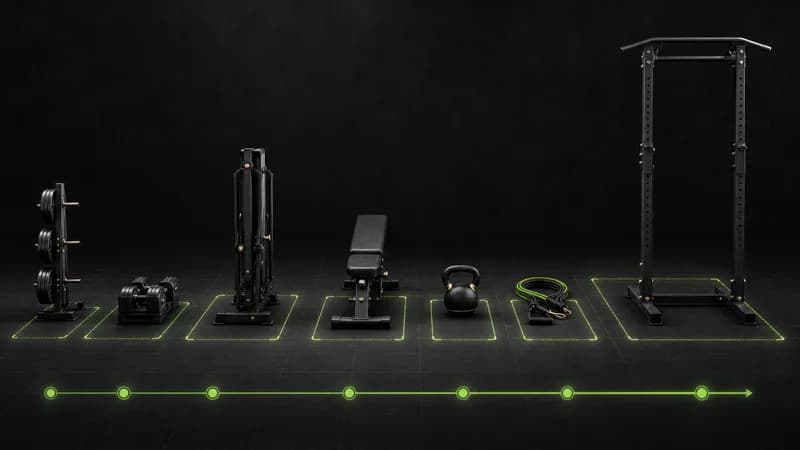
- A folding rack, adjustable dumbbells, bench, bands, pull-up bar, and vertical storage beat a room full of single-use machines.
- Plan the empty space first. The training lane is the equipment.
- Buy for patterns: squat, hinge, push, pull, carry, brace, and jump or conditioning.
- Use strength standards as a calibration tool, not as proof that every athlete needs maximal barbell work.
public search-demand data check
The trend check compared strength training, boxing workout, and gym workout. The reason to include boxing is practical: combat athletes need strength equipment that does not erase skill space. A rack that blocks footwork drills or bag movement is not efficient, even if it looks powerful in a photo.
Equipment order that actually works
Buy the floor first. That means rubber, lighting, a camera angle, and a safe lane. Then buy adjustable dumbbells, a bench, bands, a pull-up option, a rack or stands, and vertical storage. Add specialty tools only after you can train squat, hinge, push, pull, carry, brace, and rotate.
OpenPowerlifting is a useful reminder that maximal strength exists on a spectrum. A serious lifter may eventually need a barbell, plates, and a stable rack. A fighter, climber, or general athlete may get more return from dumbbells, pull-ups, split squats, carries, and a reliable filming setup. The right equipment is the equipment that keeps the primary adaptation measurable.
The practical workflow
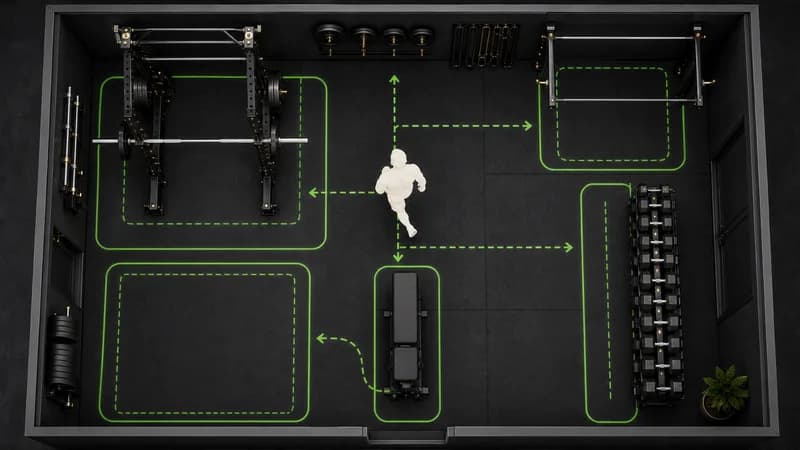
Measure the room. Draw the biggest uninterrupted rectangle. Keep that rectangle. Place storage on walls, rack against the strongest surface, and bench where it can move without blocking exits. Then test three sessions: lower body, upper body, and conditioning. If any session requires moving five objects before every set, the layout is lying.
For combat athletes, reserve shadowboxing and footwork space even in a strength room. A boxing stance needs lateral room, not just a mirror. The best small gym lets you lift, film, pivot, and carry without turning the floor into a maze.
Common mistakes
Do not buy a machine because it solves one exercise if it kills five others. Do not store plates on the floor. Do not put the bench where it blocks the rack walkout. Do not ignore ceiling height if pull-ups, overhead press, or jump rope matter. Most small gyms are not too small. They are over-owned.
How Titans Grip athletes should use it
Use Titans Grip to build a movement inventory. Film the same lift from the same angle each week. If the app can see the full body, your room is probably usable. If the camera angle is always compromised by clutter, the layout needs fixing before the program does.
Film one set or one round, tag the constraint, and review it like a coach instead of guessing.
Sources checked
Every external source linked below was checked for a live HTTP response before publishing. public search-demand data is used as directional demand evidence, not as a claim of exact search volume.
Coach Pavel
Powerlifting specialist. Expert in squat technique, bench press, deadlift.
Coach Pavel is the AI coaching persona behind Powerlifting AI, built to provide personalized powerlifting guidance through video analysis, training plans, and technique breakdowns.
Related Articles
Best Combat Sports AI Training App 2026: JAB AI vs Fight AI vs Kayyo vs Titans Grip — Which AI Coach Actually Works?
Jun 12, 2026 · 25 min read
PowerliftingCrowded Gym Workout Plan: The One-Station Method for Peak Hour Training
May 24, 2026 · 4 min read
generalThe Sport BMI Calculator: Why Your Body Mass Index Is Lying
May 18, 2026 · 22 min read
Train Powerlifting with AI
Powerlifting AI gives you an AI coach that analyzes your technique, plans your training, and tracks your nutrition. Try it for free.