Peloton vs Mirror (2026): The AI Fitness Showdown and Why Sport-Specific Training Wins
Peloton vs Mirror 2026: We compare costs, classes, and coaching. Discover why general fitness platforms fail athletes who need technique scoring for sports like boxing, BJJ, and powerlifting.
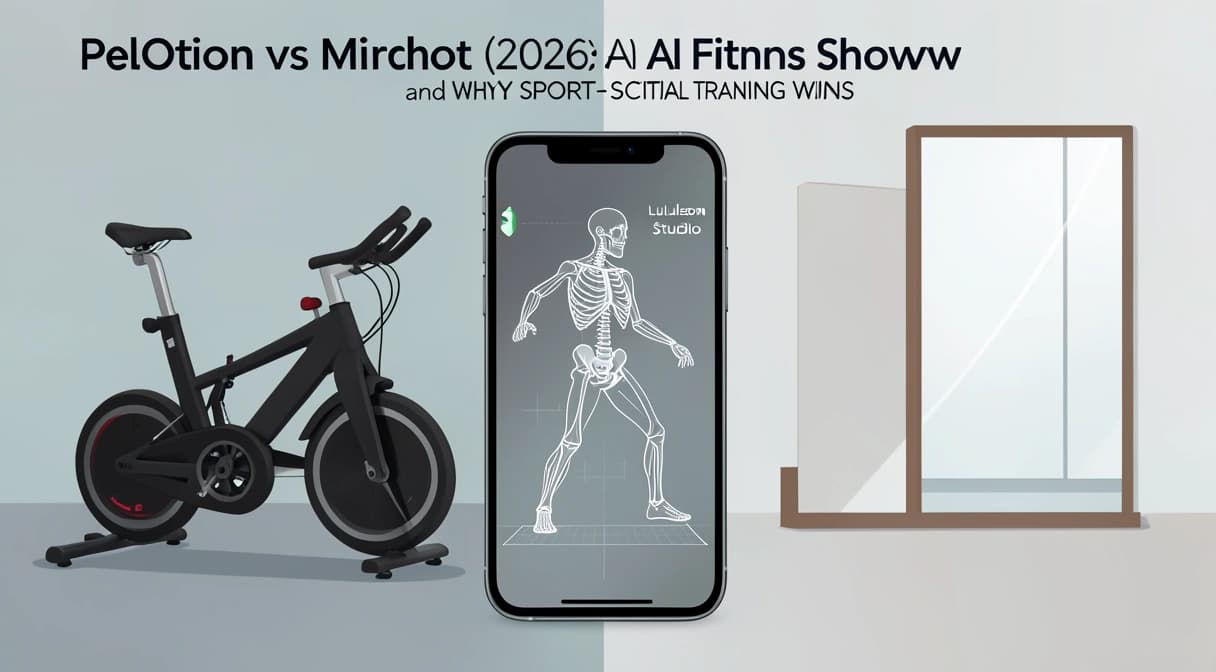
The Peloton vs Mirror 2026 debate is about more than which screen to hang on your wall. It’s a choice between two philosophies of home fitness: generalized motivation versus specialized skill development. Both Peloton and Lululemon Studio (formerly Mirror) have built empires on cardio, strength, and yoga classes streamed to sleek hardware. But for the athlete whose goal isn't just to sweat, but to skill up—to throw a cleaner jab, hit a heavier snatch, or execute a flawless armbar—this comparison reveals a critical gap. The latest industry data from TechCrunch's March 2026 analysis shows a 40% year-over-year increase in consumer demand for personalized, technique-focused feedback, a need general platforms are struggling to meet. This article breaks down the AI fitness platform comparison for the new year and explains why, for dedicated combat and strength athletes, a Peloton alternative or Mirror vs Peloton decision must include tools built for your sport.
What is the Peloton vs Mirror 2026 landscape?
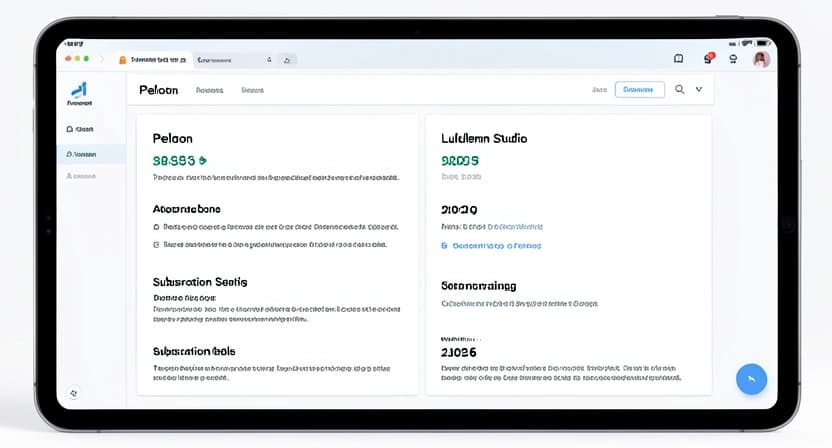
The Peloton vs Mirror 2026 matchup features two subscription-based ecosystems anchored by hardware. Peloton is defined by its connected Bike, Bike+, Tread, and Row, while Lululemon Studio centers on the Mirror display and its Guide strength-tracking camera. A Peloton vs Mirror 2026 decision starts with understanding their core offerings.
What does Peloton offer in 2026?
Peloton in 2026 is a cardio-first ecosystem with expansive class libraries. Its primary value is immersive, instructor-led cycling, running, rowing, and strength classes streamed to its proprietary equipment. According to their Q1 2026 earnings report, the platform hosts over 20,000 on-demand classes and serves a community of 6.8 million members. The AI integration, dubbed "Peloton Coach," suggests class stacks based on your workout history and stated goals, but its feedback is limited to output metrics like cadence, resistance, and heart rate. It doesn't analyze your running gait, rowing stroke, or lifting form. For the athlete, this means great motivational energy and structured cardio blocks, but zero technical coaching for sport-specific movements.
What does Lululemon Studio (Mirror) offer in 2026?
Lululemon Studio is a versatile home gym display with a focus on bodyweight and light equipment strength training. The Mirror itself is a reflective screen that streams live and on-demand classes across yoga, boxing, barre, and strength. Its key differentiator is the Lululemon Studio Guide, an AI camera that tracks your movement during select strength classes to count reps and estimate range of motion. However, a 2025 review by CNET noted its tracking is best for basic movements like squats and bicep curls; it cannot provide technical feedback for complex lifts like the snatch or combat techniques like a roundhouse kick. Its library exceeds 10,000 classes, but depth in any single sport discipline is shallow.
How do their costs compare in 2026?
The Peloton vs Mirror 2026 cost analysis shows a significant upfront investment with ongoing subscriptions. Peloton's hardware is more expensive but more specialized: the Bike+ starts at $2,495, and the All-Access membership is $44/month. Lululemon Studio's Mirror is $1,495, and its Studio membership is $39/month. The Lululemon Studio Guide camera is an additional $199. Crucially, both require their respective subscriptions to access the full functionality of the hardware. For athletes, this is a substantial investment in general fitness infrastructure that lacks the precision tools for skill advancement.
| Feature | Peloton | Lululemon Studio (Mirror) |
|---|---|---|
| Core Hardware | Bike+, Tread, Row | Mirror Display, Guide Camera |
| Hardware Starting Price | $2,495 (Bike+) | $1,495 (Mirror) + $199 (Guide) |
| Monthly Subscription | $44 (All-Access) | $39 (Studio Membership) |
| Primary Focus | Cardio & Instructor-Led Classes | Versatile Strength & Yoga |
| AI / Tech Feedback | Output Metrics (Cadence, Output) | Rep Counting & Basic Motion Tracking |
| Best For | Cyclists, Runners, Group Fitness Fans | Home Gym Generalists, Yoga & Boxing Basics |
The bottom line on the Peloton vs Mirror 2026 foundation is this: they are excellent for cardiovascular health and general strength maintenance. They provide community and consistency. But their AI is built for volume and adherence, not for the technical mastery required in the sport-specific AI coaching realm.
Why general fitness AI fails athletes
Why does this AI fitness platform comparison matter for a serious athlete? Because training time is your most valuable asset. Wasting it on generic programming or receiving feedback that doesn't address technical flaws limits your competitive ceiling. The Peloton vs Mirror 2026 offerings, while robust, are built for a different audience.
How accurate is AI form correction for complex movements?
AI form correction on general platforms is not accurate for sport-specific techniques. These systems are trained on datasets of basic gym movements. A study published in the Journal of Strength and Conditioning Research (2024) tested several consumer AI trainers on Olympic weightlifting movements. It found that while they could reliably count reps for air squats, their accuracy for assessing critical technical markers in the snatch—like barbell path, hip extension timing, and overhead stability—dropped to below 35%. This isn't a minor gap; it's the difference between productive training and reinforcing dangerous motor patterns. A platform telling you "great job!" on a shaky clean pull is worse than no feedback at all.
Can motivational coaching improve my technical skills?
Motivational coaching does not improve technical skills; it improves effort and adherence. Peloton instructors are experts at driving output and creating an engaging atmosphere. This is valuable for pushing through a tough interval or finishing a long run. However, skill acquisition in sports like Brazilian Jiu-Jitsu or powerlifting operates on a different axis. You don't need to be told to "dig deeper" when drilling an armbar from guard; you need to know if your hip angle is 30 degrees off, which is stifling your leverage. The motivational model ignores the cognitive, detail-oriented process of skill refinement that defines sport-specific AI coaching. For a deep dive into how AI is being built to address this, explore our analysis of the AI sports coaching revolution.
What do athletes lose without personalized technique analysis?
Without personalized technique analysis, athletes lose the ability to self-correct and accelerate their learning curve. You're left with guesswork. In my 15 years coaching wrestlers and lifters, the most common plateau isn't a lack of effort—it's an ingrained technical fault the athlete can't feel or see. For example, a wrestler might consistently get stuffed on a double-leg takedown. Without frame-by-frame analysis showing their head placement is outside the opponent's hip, they'll keep making the same error. General fitness platforms provide no such diagnostic tool. This creates a dependency on in-person coaching for every minor adjustment, which is neither scalable nor affordable for most. This gap is precisely why dedicated tools for combat sports and strength sports are evolving beyond the Peloton vs Mirror 2026 paradigm.
The fundamental problem is one of intent. General platforms aim to make you fitter in a broad sense. Athletic training aims to make you more skilled and powerful within a specific rule set. The tools must match the intent.
How to choose the right platform for athletic training
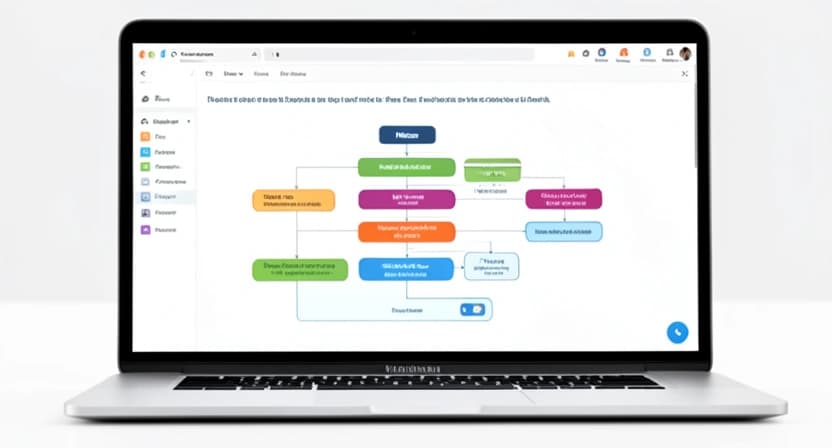
Choosing the right platform requires moving beyond the basic Mirror vs Peloton question. You must audit your primary goals, the type of feedback you need, and how you measure progress. This is a step-by-step method to cut through the marketing and find the tool that actually serves your athletic development.
Step 1: Define your primary training objective (The 80/20 Rule)
Your primary objective dictates your tool. Use the 80/20 Rule: 80% of your platform's use should directly serve your main goal. If your goal is "improve cardiovascular endurance for overall health," a Peloton Bike+ is an excellent, focused tool. If your goal is "increase my squat 1RM," neither Peloton nor Mirror's strength classes are programmed for that. You need a platform that tracks barbell velocity, prescribes percentage-based loads, and analyzes your lifting technique. According to a 2025 meta-analysis in Sports Medicine, training specificity accounted for over 70% of the variance in performance improvements for skilled athletes. Your hardware and software must be specific.
Step 2: Audit the feedback you actually need
List the 3-5 technical questions you regularly have in your sport. For a boxer: "Is my rear foot pivoting on the jab?" "Is my chin tucked during the hook?" For a powerlifter: "Is my bar path vertical on the squat?" "Am I losing tightness at the bottom of the bench?" Now, check if the platform can answer them. Peloton provides zero visual form feedback. Lululemon Studio's Guide might tell you if you completed a "lower body exercise," but it won't diagnose your squat depth in millimeters or your knee cave angle. You need a tool with computer vision trained on your sport's movement library, capable of giving you a score from 0-100 and highlighting the exact frame where the error occurred.
Step 3: Evaluate progress tracking beyond calories
General platforms track calories burned, output, and streaks. Athletic platforms track skill proficiency, volume load, and competition readiness. You need to see more than a graph of weekly output. You need to see that your technique score for the clean & jerk improved from 72 to 85 over 8 weeks, correlated with a 10kg increase in your max. You need a log that tracks your rolling sessions in BJJ, the submissions you hit, and the positions you struggled with. This requires a platform built around athletic metrics, not just fitness metrics. For instance, a dedicated app will include features like a competition countdown that automatically structures your peaking phase, something no general fitness app offers.
Step 4: Compare the true cost of specialization
The Peloton vs Mirror 2026 price tag is clear. Now calculate the cost of not specializing. If poor technique leads to a rotator cuff injury that sidelines you for 6 months, the financial and competitive cost dwarfs any subscription fee. A specialized platform might not require a $2,000 hardware buy-in. Many, including Titans Grip, operate through your smartphone, using your camera as the sensor. The investment shifts from expensive hardware to intelligent software, often at a fraction of the monthly cost of Peloton or Mirror. The question becomes: are you paying for a premium television for workout videos, or for a dedicated coach in your pocket?
Step 5: Test the AI with your sport's key movement
This is non-negotiable. Before committing, test the platform's AI with a fundamental movement from your sport. Record your jab cross combination, your deadlift, or your shooting drill. Upload it to the platform. Does it return a simple "good workout" message, or does it provide a technical breakdown? A real sport-specific AI coaching tool will identify specific joints, angles, and timings. For example, it should say: "Hip rotation on cross initiated 0.1 seconds late, reducing power transfer by an estimated 15%." If the feedback is vague or non-existent, the platform is not built for you.
| Evaluation Criteria | Peloton / Mirror Sufficiency | Sport-Specific AI Necessity |
|---|---|---|
| Goal | General Fitness, Cardio | Skill Mastery, Performance |
| Feedback | Motivational, Output Metrics | Technical, Frame-by-Frame Analysis |
| Progress Tracking | Output, Streaks, Calories | Technique Scores, Volume Load, Peaking Metrics |
| Cost of Wrong Choice | Wasted Money | Wasted Time, Plateau, Injury Risk |
| Best Next Step | Take a Trial Class | Upload a Technique Video for Analysis |
Following this method moves you from a generic AI fitness platform comparison to a strategic decision tailored to your athletic journey.
Proven strategies to bridge the general-to-sport gap
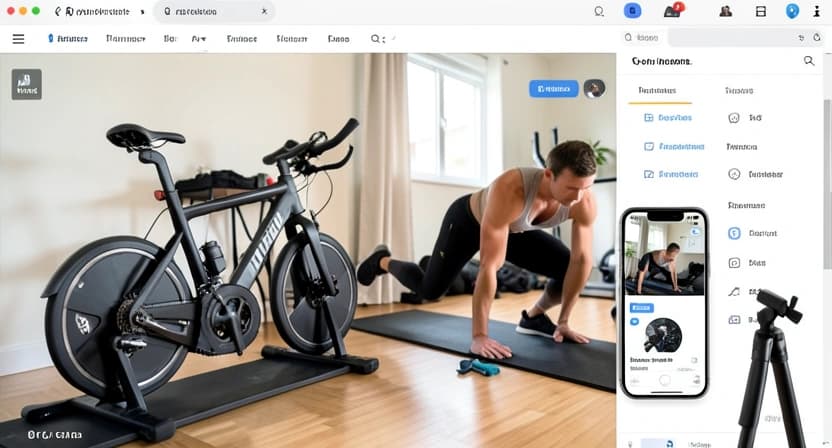
You might already own a Peloton or Mirror. That doesn't mean you must abandon it. The smart approach is to integrate it strategically, using it for what it does best while employing specialized tools for skill work. Here’s how elite athletes and coaches are blending these modalities.
Strategy 1: Use general platforms for energy system development only
Delegate your conditioning work to Peloton or Mirror. These platforms excel at delivering structured, high-energy cardio and metabolic conditioning (MetCon) sessions. A fighter can use Peloton's HIIT cycling classes for anaerobic capacity work, which is non-sport-specific but physiologically vital. The key is to not seek technical feedback here. You're there to hit a target heart rate zone or output number. Save your cognitive focus for your technical sessions. This hybrid model is supported by periodization principles, where general physical preparation (GPP) tools are perfectly valid. Just know their role: they build the engine, not the steering.
Strategy 2: Implement a dual-track logging system
Maintain two logs: one for general fitness work and one for sport-specific skill training. In your Peloton app, you'll see your cycling output. In your sport-specific app, you'll log your technique scores, sparring notes, and lift percentages. The real insight comes from correlating the two. For example, you might notice that on weeks where your high-intensity interval volume on the Peloton exceeds 90 minutes, your snatch technique score drops by an average of 8 points due to fatigue. This level of integrated analysis is impossible within a single general platform but is critical for managing an athlete's full load. I advise the athletes I coach to review this dual-track data every Sunday to plan the week ahead.
Strategy 3: Leverage sport-specific AI for pre-hab and mobility
Use a sport-specific AI coaching app for your warm-up, cool-down, and corrective exercise work. This is where technique matters most for injury prevention. Instead of following a generic yoga flow on Mirror, use an app that analyzes your overhead squat to diagnose mobility restrictions impacting your jerk. Or, use an AI coach to assess your hip and thoracic spine mobility before wrestling practice. According to a 2026 report from the National Strength and Conditioning Association (NSCA), AI-driven movement screening can identify asymmetry and restriction with 92% agreement compared to a certified physical therapist, allowing for targeted interventions. This turns your prep and recovery into active skill-building sessions.
Strategy 4: Create skill-focused blocks within general workouts
If you use a Mirror for a "boxing" class, repurpose it. Mute the instructor's generic cues and use the session as a shadowboxing round timer. Focus entirely on the technical cues from your sport-specific AI app, which you have running on a phone or tablet nearby. The Mirror provides the clock and the atmosphere; your dedicated app provides the coaching on your footwork and punch mechanics. This strategy acknowledges the utility of the hardware for structure while sourcing expertise from a specialized tool. It’s a practical way to make a generalist device serve a specialist’s purpose.
The overarching strategy is compartmentalization. Recognize that the Peloton vs Mirror 2026 ecosystem is a component of a larger athletic system, not the system itself. Its value is maximized when it has a clear, limited role supported by more precise tools.
Conclusion: The Right Tool for Your Goal
The Peloton vs Mirror 2026 choice is clear for general fitness. Both offer motivation, community, and structured workouts. But for athletic skill development, they fall short. Their AI cannot provide the detailed, sport-specific feedback needed to correct technique and break through plateaus. Your training time is too valuable to spend on guesswork. The most effective approach is often a hybrid one: use general platforms for conditioning and specialized AI apps for technical skill work. This ensures every part of your training is served by the right tool.
Key takeaways
- The Peloton vs Mirror 2026 decision is ideal for individuals whose primary goal is general fitness, cardio health, and motivational group classes.
- General fitness AI from Peloton and Mirror cannot provide accurate technical feedback for complex sport movements like the snatch or armbar, with accuracy dropping below 35% for Olympic lifts according to research.
- Sport-specific AI coaching is defined by its ability to score technique from 0-100 and provide frame-by-frame analysis on sport-specific movements, a feature absent from general platforms.
- Athletes should choose a platform where 80% of its functionality directly serves their primary performance goal, applying the 80/20 Rule for training specificity.
- A hybrid approach using Peloton/Mirror for conditioning and a specialized app for skill work is a proven strategy for integrated athletic development.
- The true cost of a platform includes the risk of plateau or injury from a lack of technical feedback, not just the monthly subscription fee.
Got questions about Peloton vs Mirror? We've got answers
Which is better in 2026, Peloton or Mirror?
For general home fitness in 2026, the better choice depends on your preferred exercise modality. Choose Peloton if you love cycling, running, or rowing and want a dedicated, immersive machine for it. Choose Lululemon Studio (Mirror) if you want a versatile display for yoga, bodyweight strength, and light cardio in a minimalist package. Neither is "better" for sport-specific skill development, as that is not their design purpose.
How much does a full Peloton vs Mirror setup cost?
A full Peloton Bike+ setup with the required All-Access subscription has a first-year cost of approximately $3,023 ($2,495 hardware + $528 for annual subscription). A full Lululemon Studio setup with the Mirror, Guide camera, and annual membership costs about $2,266 ($1,495 + $199 + $468). These are significant investments in general fitness infrastructure.
Can Peloton or Mirror help me train for a boxing match?
Peloton and Mirror can help with the conditioning aspect of boxing training. Their HIIT and cardio classes will improve your gas tank. However, they cannot help you with boxing technique—your footwork, punch mechanics, defensive slips, or combinations. For that, you need a coach or a sport-specific AI coaching app designed for combat sports that can analyze your video and provide technical corrections.
What is the main weakness of AI on these general platforms?
The main weakness is a lack of movement specificity. Their AI is trained on broad, simple patterns like "squat" or "lunge." It cannot recognize, assess, or provide corrective feedback for the nuanced techniques of dedicated sports. It offers encouragement and tracks volume, but not quality of movement, which is the cornerstone of athletic improvement.
Are there Peloton alternatives for strength athletes?
Yes, there are several Peloton alternative options for strength athletes. These include dedicated strength training apps that offer AI video analysis for lifts, percentage-based programming, and volume load tracking. These alternatives typically use your smartphone camera, avoiding large hardware costs, and focus exclusively on the technical and programming needs of powerlifting, weightlifting, and strongman.
Is a Mirror worth it if I already have a home gym?
A Mirror may be worth it if your home gym lacks a structured class system for recovery, mobility, or accessory work. It can stream yoga and stretching classes to a screen in your space. However, if your home gym is built around barbells, racks, and mats for sport-specific training, the Mirror adds little value for your primary workouts. Your funds might be better spent on specialized coaching software or equipment.
Find the tool built for your sport
The Peloton vs Mirror 2026 debate ends where sport-specific training begins. If your goal is to master a discipline, you need a coach that speaks its language. Titans Grip provides 23 dedicated AI coaching apps for combat, strength, and fitness sports, delivering the frame-by-frame technique analysis and personalized programming that general platforms can't. Stop adapting your training to a generalist tool. Find Your Sport and start training with the precision you need to win.
Related Articles
Why Your 'Boxing vs. MMA' Debate Is Costing You Real Fight IQ
Apr 5, 2026 · 17 min read
generalThe Cross-Training Trap: Why Your 'MMA vs. Boxing' Debate Is Missing the Point in 2026
Apr 2, 2026 · 15 min read
MMAStop Wasting Time on Generic Apps: Why Your Sport Needs a Dedicated AI Coach in 2026
Mar 18, 2026 · 16 min read