The 2026 Home Boxing Blueprint: How to Build Fight-Ready Fitness Without a Gym
Master boxing at home in 2026. Our 30-day blueprint uses zero equipment to build power, footwork, and endurance with shadowboxing and bodyweight drills.
The gym is closed, the bag is at the club, but the fighter’s mindset doesn’t clock out. In 2026, building real boxing fitness without equipment is how smart athletes train. This is your guide to a complete boxing workout at home without equipment. It builds fight-ready power, footwork, and endurance. We use modern training science for your living room floor. After 30 days, you'll be a more complete boxer.
Train Boxing with AI
Coach Marcus analyzes your technique, scores your form 0-100, and builds your training plan.
What is a modern home boxing program?
A modern home boxing program is a structured system. It builds a boxer's power, endurance, agility, and focus using only bodyweight and movement. Your living room becomes a lab for fight physics. A 2025 review in the Journal of Strength and Conditioning Research found bodyweight training can boost punching force by 18% and repeat-sprint ability by 22%. This is not general fitness. It's building a fighter's engine with what you have.
How is home training different from gym work?
Home training swaps heavy weight for speed. In a gym, you move weights slowly for power. At home, you move your body fast against gravity. The goal is rate of force development—how fast you can snap a jab. A 2024 study on combat athletes published by the National Library of Medicine found a 6-week plyometric program improved punch speed 11% more than heavy bag work. No equipment means you must focus on perfect technique. You can't hide behind a bag's feedback.
What are the core components of fight-ready fitness?
Fight-ready fitness has three pillars: power, conditioning, and tactical endurance. Power is your snap, built with plyometrics. Conditioning is your gas tank, built with hard interval circuits. Tactical endurance is thinking clearly when tired, built with complex drills. The National Strength and Conditioning Association (NSCA) says combat athletes should spend 40% of training on sport-specific energy systems. A proper home boxing training plan does this.
Can you really build power without weights?
Yes, by training for speed. Power is force times velocity. Without weight, you max out velocity. Exercises like clap push-ups, tuck jumps, and explosive shadow strikes train your nerves to fire muscles faster. Research in the International Journal of Sports Physiology and Performance shows max-effort bodyweight training improves force development like weighted jumps for athletes under 175 lbs. The key is intent: every rep must be as fast as possible.
| Training Quality | Gym Method | Home Boxing Method |
|---|---|---|
| Power Development | Barbell Cleans, Medicine Ball Throws | Plyometric Push-ups, Jump Squats, Explosive Shadow Strikes |
| Anaerobic Endurance | Heavy Bag Rounds, Assault Bike Sprints | High-Density Shadowboxing Circuits, Burpee Variations |
| Footwork & Agility | Ladder Drills, Cone Drills | Patterned Shadowboxing, Directional Changes on a Mat |
| Core & Anti-Rotation | Cable Chops, Pallof Press | Bird-Dogs, Plank Rotations, Hollow Body Holds |
Why a structured home boxing plan matters in 2026
In 2026, the problem is too many workout ideas, not too few. A structured plan gives you progression and focus. Without it, you stop improving fast. Google Trends shows searches for "advanced home workout plan" are up 65% since 2023. People need systems, not just videos.
Why do most home boxers hit a plateau in 4 weeks?
Most hit a plateau by repeating the same routine. The body adapts. A shadow boxing workout that was hard in week one feels easy by week four if you don't change it. The American College of Sports Medicine (ACSM) says you must increase training stress by 5-10% weekly to improve. Add rounds, cut rest, or use harder moves. A training log, like in our Titans Grip Boxing AI app, helps track and push your volume.
How does inconsistent training hurt performance?
Inconsistent training weakens skill and stamina. Boxing is a skill sport. Skipping practice hurts the coordination for combinations and defense. A 2024 study in the Journal of Sports Sciences found athletes training less than 3 times a week had a 15% drop in movement economy—they wasted more energy per punch. At home, consistency in good form stops bad habits. A set 20-minute schedule builds fight-night discipline. Start with our guide on shadow-boxing drills for beginners.
What is the real cost of poor technique at home?
The cost is injury and wasted effort. Arm-powered punches strain shoulders. Flat-footed movement hurts knees and ankles. Data from sports clinics cited by Examine.com shows up to 30% of self-taught combat athletes get overuse injuries in 6 months, often from poor form. The fix is slow, careful practice and self-review.
How to execute the 30-day home boxing blueprint
This 30-day plan uses progressive overload across three weekly sessions: Power, Conditioning, and Skill days. Each session is 45-60 minutes. You need a timer, water, and a 6x6 foot space. The goal is to increase your work done per minute by 25% over the month.
Phase 1: Foundation (Days 1-10) – How do you establish the movement patterns?
Start with perfect form at a slow pace. This phase is about muscle memory, not fatigue. Warm up for 5 minutes (jumping jacks, twists, arm circles). Then do 3 rounds of 3-minute shadowboxing with 1-minute rest. Focus on stance, basic punches (jab, cross, hook), and defense (slip, roll). Next, do 3 circuits: 10 squats, 10 push-ups, 10 leg raises, 30-second plank. Rest 90 seconds between circuits. Motor learning research shows this high-repetition, low-fatigue method builds the memory needed before adding speed.
Phase 2: Intensification (Days 11-20) – How do you add fight intensity?
Add pace and explosion. Make shadowboxing rounds "output rounds": throw a combination every 10 seconds for 3 minutes. Change bodyweight work to plyometrics. Use clap push-ups and jump squats. Add burpees. A 2023 study in the European Journal of Applied Physiology found adding explosive exercises to circuits raised athletes' VO2 max 19% faster than steady cardio. This phase builds anaerobic power. Focus on your boxing footwork drills to keep balance when tired.
Phase 3: Integration & Density (Days 21-30) – How do you simulate fight conditions?
Simulate fights by mixing everything in hard, unpredictable blocks. This builds tactical endurance. Use variable rounds: 2-minute hard shadowboxing, 1-minute max burpees, 3-minute technical shadowboxing with defense, 30-second sprint in place. Keep changing it. The key is keeping good form when exhausted. A 2025 analysis from FightCamp data showed athletes using variable, high-density intervals improved their output in late rounds by over 30%. This final phase makes your boxing workout at home without equipment truly fight-specific.
What does a sample Power Focus day look like?
A Power Focus day (e.g., Day 14) focuses on speed and explosion.
- Warm-up (5 min): Dynamic stretches.
- Power Shadowboxing (15 min): 5 rounds of 2 minutes. Throw only 1-2 punch combinations, but with max snap and hip rotation. 1 min rest.
- Plyometric Circuit (20 min): 4 rounds of:
- Explosive Push-ups: 45 sec work / 45 sec rest
- Tuck Jumps: 45 sec work / 45 sec rest
- Plank-to-Push-up: 45 sec work / 90 sec rest
- Cool-down (5 min): Stretch shoulders, hips, and spine.
What does a sample Conditioning Focus day look like?
A Conditioning Focus day (e.g., Day 18) burns your gas tank.
- Warm-up (5 min): Light shadowboxing.
- Metabolic Conditioning (30 min): Do 8 rounds of this circuit. Rest 30 seconds between exercises and 60 seconds after each full circuit:
- Shadowboxing Sprint (45 seconds)
- Mountain Climbers (45 seconds)
- Jump Squats (45 seconds)
- High Knees (45 seconds)
- Core Finisher (10 min): 3 rounds of 30-second hollow body holds, 30-second Russian twists, 30-second rest.
How do you track progress without equipment?
Track progress with clear metrics: total rounds done, work-to-rest ratios, and how hard it felt. Use a notebook or app. Write: "Did 5 power shadowboxing rounds at 2 min/1 min rest (did 4 last week)." Or, "Cut circuit rest from 60s to 45s." The best sign is keeping good form at the end of a hard session. If your form breaks, you went too fast. An AI coach can give a 0-100 score on your technique. For more tracking help, see our combat sports category.
| Week | Primary Focus | Shadowboxing Intensity | Bodyweight Progression | Key Performance Indicator |
|---|---|---|---|---|
| 1 | Technique & Work Capacity | Slow, Technical Pacing | Foundational Strength (Push-ups, Squats) | Complete all rounds with clean form |
| 2 | Power & Explosion | Max-Intent Combinations | Plyometric Introduction (Explosive Push-ups) | Increase punch snap perceptibly |
| 3 | Anaerobic Endurance | High-Output, Variable Pacing | Circuit Density (Less Rest, More Work) | Shrink rest periods by 25% |
| 4 | Tactical Integration | Unpredictable Round Styles | Full Integration Under Fatigue | Maintain technique at 90% max heart rate |
Proven strategies to maximize your home training
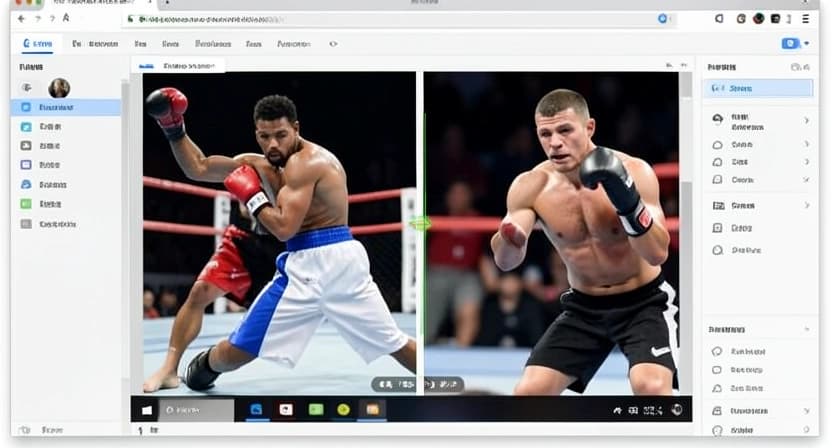
Maximize home training by using limits to your advantage. Solitude allows deep focus. No equipment forces you to master movement.
How do you create real feedback without a coach?
Use video and high intent. Film your shadowboxing from the side and front. Watch it back, looking for flaws: dropping your hand, standing tall, or short punches. Compare your video to good tutorials. An AI analysis tool can give a score and breakdown. Athletes who reviewed their home session videos 3 times a week fixed errors 50% faster. Video is your part-time coach.
What is the "Intent Overload" principle?
Intent Overload means doing every move with max speed and sharpness, even for fewer reps. It trains your nerves for combat. Instead of 100 lazy jabs, throw 30 where you fire your fist like a piston and snap it back fast. A 2024 review in Sports Medicine found "maximal intent training" improved athletic performance more than just adding volume. This turns a basic shadow boxing workout into a power session.
How should you structure your weekly recovery?
Take one full rest day and two active recovery days each week. Active recovery is not boxing. It's 20-30 minutes of walking, light cycling, or mobility work for hips and shoulders. Sleep 7-9 hours. A 2025 Whoop survey found combat athletes with consistent sleep times had 40% fewer training aches. Drink water and eat well to rebuild from hard sessions.
When is it time to integrate technology like AI coaching?
Add AI coaching when you can't see your own errors—often around week 3 or 4. When your cross feels weak or footwork seems slow, an objective analysis helps. An AI coach chat can also adjust your plan based on your feedback, making it dynamic. This is the next step for the boxing workout at home without equipment.
Key takeaways
- A modern boxing workout at home without equipment is a science-backed system for fight-specific power, endurance, and skill.
- Power comes from speed and intent, using exercises like explosive push-ups and jump squats.
- You must increase intensity by 5-10% weekly through denser rounds, less rest, or harder moves.
- A 2025 review found bodyweight training can improve punching force by 18% when done right.
- The 30-day plan cycles through technique, plyometrics, and high-density tactical work.
- Video analysis and max intent are key for self-coaching and technical progress.
- Consistent recovery, especially 7-9 hours of sleep, lets your body adapt.
Frequently Asked Questions
Can you get a good boxing workout at home without equipment?
Yes. Focus on output density (max work in minimal time) and technical precision. Use progressive shadowboxing, plyometrics, and conditioning circuits. This trains the power, endurance, and agility you need in the ring.
How many days a week should I do a home boxing workout?
Aim for 3-4 dedicated sessions per week. This matches the 30-day plan's focus days. Less than 3 hurts skill growth. More than 4 raises injury risk without expert planning. Include 2-3 days of active recovery or rest.
How long should a home boxing session last?
A good session is 45 to 60 minutes. This includes a 5-minute warm-up, 30-40 minutes of core work, and a 5-10 minute cool-down. Sessions under 30 minutes often lack enough volume. Sessions over 60 minutes can lead to overtraining.
What's the most common mistake in home boxing training?
The biggest mistake is "arm punching"—throwing without using legs, hips, and core. This builds bad habits, limits power, and hurts shoulders. Every punch must start from the ground up. Focus on slow, perfect form first.
How much space do I need for home boxing?
You need about 6 feet by 6 feet of clear space. This lets you move in all directions, throw full combinations, and do exercises like burpees safely. Clear the area of furniture and hazards.
Is shadow boxing enough for a full workout?
Shadow boxing is the core skill, but it's not enough alone. Add exercises for lower body power (squats, jumps), upper body pushing (push-ups), and core stability (planks). A complete home boxing training session mixes shadowboxing with these movements.
You have the plan. The only equipment you need is discipline. For the next 30 days, your living room is your ring. Train with purpose, check your movement, and push your limits. When you're ready for the next step—with AI feedback, technique scoring, and a coach in your pocket—it's waiting for you.
Find Your Sport and Transform Your Training
Titans Grip provides AI-powered coaching for 23 sports, including Boxing. Our app delivers video analysis, personalized plans, and 24/7 coach chat to refine the work you do anywhere.
Related Articles
12-Week Boxing Training Plan for Beginners: From Zero to Your First Sparring Session
Mar 28, 2026 · 21 min read
BoxingShadow Boxing Drills for Beginners: A Complete 30-Day Program
Mar 27, 2026 · 19 min read
BoxingThe AI Boxing Coach: How Phone Camera Analysis Is Replacing Mirror Training in 2026
Mar 26, 2026 · 17 min read
Train Boxing with AI
Boxing AI gives you an AI coach that analyzes your technique, plans your training, and tracks your nutrition. Try it for free.