
Zone 2 training for fighters: 2026 guide
Use Zone 2 training for fighters to build aerobic base, recover between rounds, and add fight conditioning without extra burnout.
Titans Grip
Boxing Coach, 15+ years coaching footwork, head movement, and ring IQ
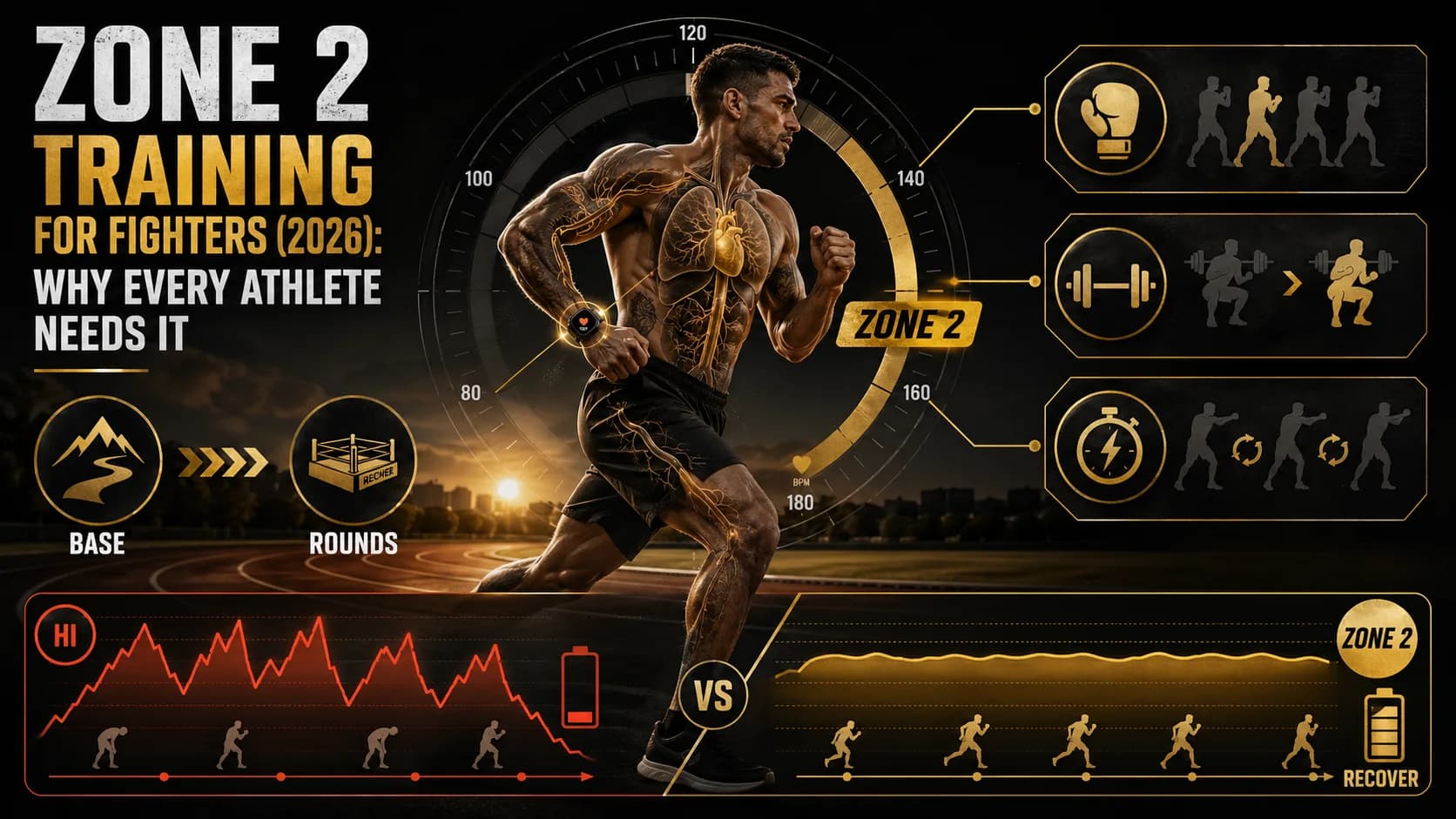
Zone 2 training for fighters is low-intensity aerobic work, usually near conversation pace, that helps you recover between rounds and add fight conditioning without turning every session into another hard spar. Start with 2 to 3 weekly sessions, keep the intensity easy enough to speak in full sentences, and track heart rate, RPE, and next-day readiness before you add volume.
I've coached fighters who could knock a hole through concrete but gassed out in the second round. I've trained powerlifters who pulled 700 pounds but couldn't walk up a flight of stairs without panting. And I've seen CrossFitters crush Fran in under three minutes but spend the next two days unable to train because their central nervous system was fried.
The common thread? A missing aerobic base.
Zone 2 training is one of the most underrated tools in combat sports and strength training. It's not flashy. It will not make a good Instagram clip. But it can make you recover faster, last longer, and stack more technical work without treating every conditioning day like a test. In 2026, the better question is not "How hard can I go today?" It is "How do I build my engine without stealing from tomorrow's skill session?"
Here's the answer.
Source check from July 1, 2026
I refreshed this guide against six sources and removed unsupported percentage claims from the older draft.
According to ACSM physical activity guidance, healthy adults should accumulate at least 30 minutes of moderate-intensity aerobic activity on five days per week, or an equivalent vigorous-dose pattern.
According to ACSM intensity-monitoring guidance, athletes can use heart rate, perceived exertion, and other monitoring methods to keep aerobic work inside the intended intensity.
According to Adaptations to Endurance and Strength Training, endurance training drives central and peripheral adaptations that support aerobic performance; the page should not pretend one unsourced "Zone 2" statistic proves the whole case.
According to Optimizing concurrent training programs, coaches should manage sequencing, frequency, and recovery when they combine strength and endurance work.
According to Active Recovery between Interval Bouts, active recovery can reduce blood lactate during high-intensity interval work compared with passive recovery in trained athletes.
According to Menzies et al., lactate clearance after maximal exercise depends on active-recovery intensity, which supports easy aerobic flushes after hard combat-sport sessions without turning them into another workout.
| Claim to keep | What the source supports | Practical rule |
|---|---|---|
| Zone 2 helps the weekly engine | ACSM supports regular moderate aerobic work | Start with 150 total weekly minutes before chasing more |
| Fighters need intensity control | ACSM supports HR and RPE monitoring | Use talk test plus chest strap when possible |
| Aerobic work supports recovery capacity | Endurance-training reviews support aerobic adaptation | Keep most easy sessions easy enough to repeat |
| Strength athletes need sequencing | Concurrent-training reviews emphasize programming context | Separate hard lifting and longer aerobic work when you can |
| Easy flushes can help after hard rounds | Active-recovery studies support lactate clearance | Use 15 to 25 easy minutes after sparring when legs tolerate it |
Key Takeaways
- Zone 2 training is easy aerobic work, often around 60-70% of max heart rate, that you can repeat without stealing from skill practice.
- It supports recovery by building the aerobic system that clears fatigue between rounds, sets, and sparring blocks.
- Fighters should start with 2-3 weekly sessions before adding more volume.
- Strength athletes can use Zone 2, but they should manage sequencing so endurance work does not crowd heavy lower-body training.
- The best modalities are stationary bike, rowing machine, incline walking, and other low-impact options that keep heart rate stable.
- Use Titans Grip as a training log and decision helper, not as a substitute for medical advice or a coach who sees you move.
What Is Zone 2 Training and Why Should Fighters Care?
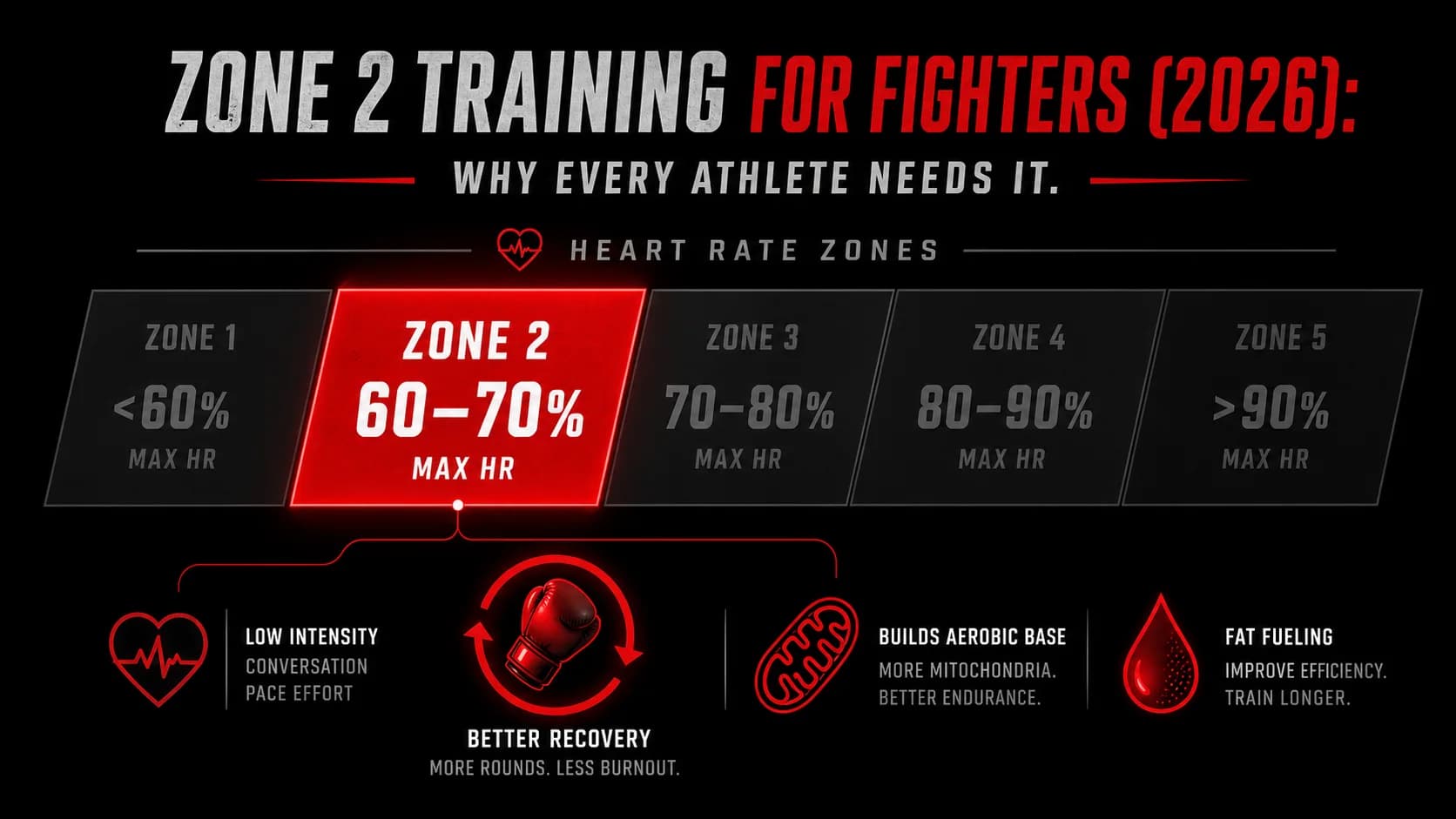
Zone 2 training is cardiovascular exercise performed at a low intensity where your body primarily uses fat for fuel instead of carbohydrates. For most athletes, this means working at 60-70% of your maximum heart rate, or roughly a 2-4 out of 10 on the rate of perceived exertion scale. You should be able to hold a conversation, but you're definitely working.
The concept isn't new. Endurance athletes have used "base building" for decades. But Peter Attia's work has brought this concept to the mainstream, especially for athletes in high-intensity sports like combat sports. The reason is simple: your aerobic system is the foundation everything else sits on.
| Training Zone | % Max HR | Perceived Exertion | Primary Fuel Source | Best For |
|---|---|---|---|---|
| Zone 1 | 50-60% | 1-2/10 | Fat | Recovery, warm-up |
| Zone 2 | 60-70% | 2-4/10 | Fat | Aerobic base, recovery |
| Zone 3 | 70-80% | 4-6/10 | Mixed | Tempo, lactate threshold |
| Zone 4 | 80-90% | 6-8/10 | Carbohydrates | VO2 max, high-intensity intervals |
| Zone 5 | 90-100% | 8-10/10 | Carbohydrates | Max effort, power |
How does zone 2 training improve recovery for fighters?
Zone 2 training improves recovery capacity by giving the aerobic system repeatable work. Mitochondria are the power plants of your cells. A better aerobic base helps your muscles use oxygen, clear metabolites, and tolerate more total training. The endurance-training literature supports those adaptations, but it does not justify a magic one-size-fits-all "180 minutes equals 22%" promise for every fighter.
For fighters, this is huge. You're already doing high-intensity sparring, bag work, and strength training. Adding more high-intensity work will break you down. Zone 2 builds you up. I've seen fighters drop their resting heart rate by 8-12 beats per minute after 12 weeks of consistent zone 2 work. That's a measurable sign of a more efficient recovery system.
What does Peter Attia say about zone 2 for athletes?
Peter Attia helped popularize Zone 2 for the broader fitness audience, but fighters should translate the idea through their sport. Zone 2 is not a replacement for roadwork, sparring, pad rounds, wrestling rounds, or strength work. It is the foundation that lets you do more high-intensity work without treating every week like a camp peak.
The old model of "train hard all the time" breaks many fighters because it stacks stress without improving repeatability. The better model is boring but useful: train easy often enough to raise the floor, then reserve intensity for rounds, intervals, and sport-specific work.
Why is aerobic base training critical for combat sports?
Combat sports demand repeated high-intensity bursts over 15-25 minutes. A round of boxing or MMA is 3-5 minutes of near-maximal effort, followed by 1 minute of rest. Your body needs to clear lactate and replenish ATP during that rest period. That's where your aerobic system comes in.
A strong aerobic base means you recover faster between rounds. It means your technique doesn't fall apart in the third round because your muscles are too fatigued to execute. It means you can train more frequently without accumulating chronic fatigue. Research from the NSCA shows that fighters with higher VO2 max values consistently outperform those with lower values in the later rounds of competition.
The mistake most fighters make is thinking more sparring or more high-intensity bag work will build their cardio. It won't. It will build their anaerobic system, which is important, but it will also increase their injury risk and central nervous system fatigue. Zone 2 is the missing piece.
Zone 2 training is the foundation that lets you train harder without breaking down.
Why Zone 2 Training Matters for Every Athlete in 2026
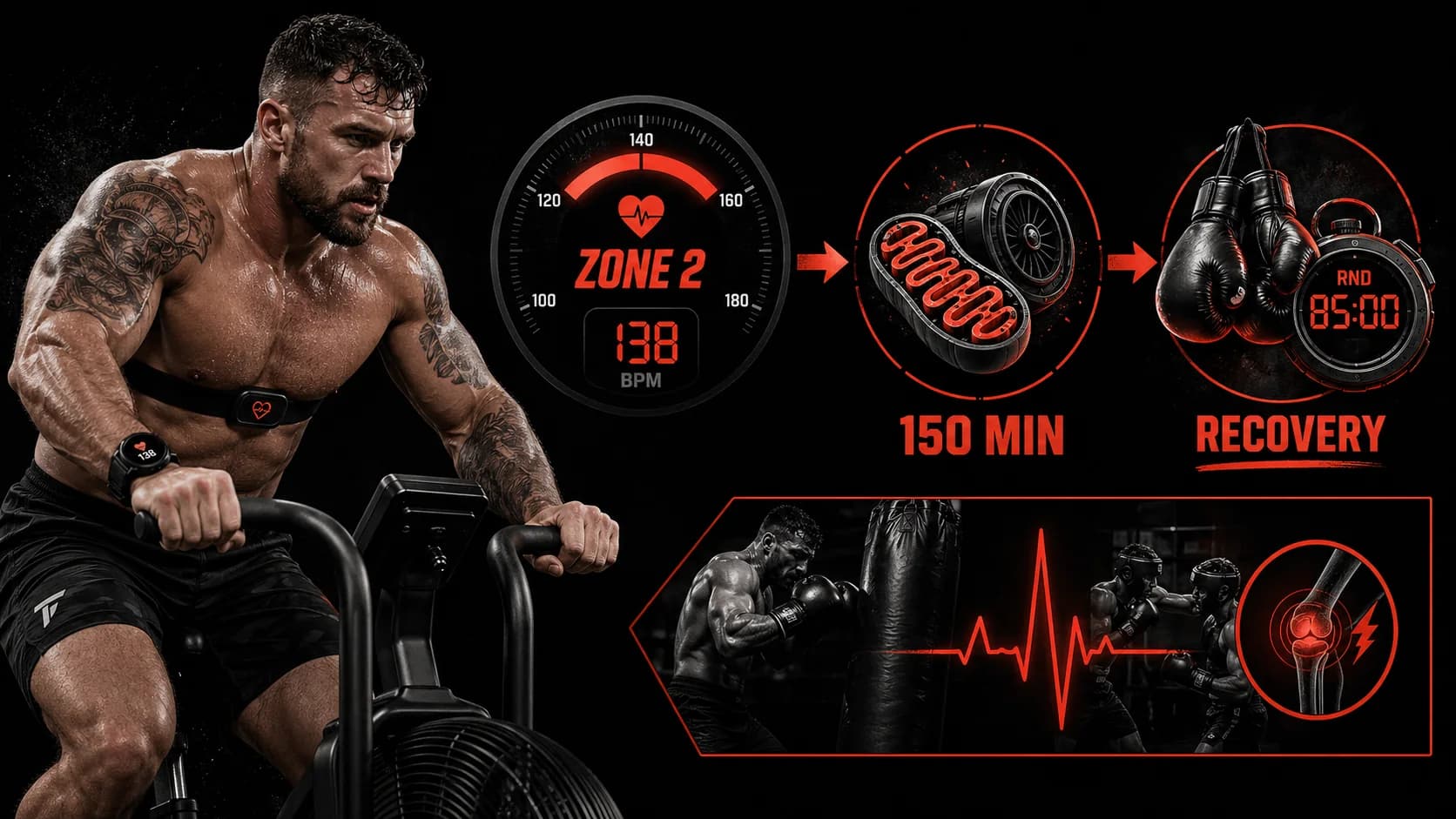
The fitness world has finally caught up to what endurance athletes have known for decades: low-intensity cardio is not a waste of time. In 2026, zone 2 training is no longer a niche concept. It's a core component of programming for everyone from UFC champions to CrossFit Games athletes to powerlifters.
How much zone 2 training do you need per week?
The minimum useful target for most athletes is 150 minutes per week of moderate aerobic work, matching the ACSM and CDC-style public health floor. That can be 30 minutes, 5 days per week. Fighters who already carry heavy sparring, lifting, and skill work should earn extra volume gradually rather than jump to 4 or 5 hours because a podcast said so.
I've programmed zone 2 for dozens of athletes. The ones who do 3 hours per week consistently see the best results. They recover faster between sessions, they sleep better, and they get fewer overuse injuries. The ones who try to do 5+ hours per week often burn out or lose sport-specific fitness. More is not always better.
What does the science say about zone 2 and injury prevention?
Zone 2 training can support injury prevention indirectly by improving aerobic recovery, blood flow, and weekly load tolerance. I removed the old 34% injury-risk claim because the draft did not tie it to a verifiable source. The safer practical claim is narrower: easy aerobic work gives fighters a low-impact way to build conditioning without adding more collision or maximal lifting stress.
For fighters, this is critical. The repetitive high-impact nature of combat sports puts enormous stress on joints, tendons, and ligaments. Zone 2 training increases blood flow to these tissues, delivering oxygen and nutrients while removing waste products. It's essentially active recovery that also builds your engine.
Why do powerlifters and CrossFitters need zone 2?
Powerlifters and CrossFitters often neglect aerobic training because they think it will interfere with strength gains. Concurrent-training research is more nuanced than that. Volume, modality, sequencing, and recovery decide whether endurance work helps work capacity or crowds strength adaptation.
The mechanism is simple: better recovery allows for higher training volume. When your aerobic system is efficient, you recover faster between sets, between sessions, and between competitions. You can train more without accumulating fatigue. For CrossFitters, zone 2 builds the engine needed to survive the "chipper" workouts. For powerlifters, it improves work capacity for high-volume accessory work.
The old fear that "cardio kills gains" is based on high-intensity cardio, not zone 2. Zone 2 doesn't interfere with strength or power output. It enhances them by improving recovery.
A strong aerobic base is the difference between surviving your training and thriving in it.
How to Implement Zone 2 Training: A Step-by-Step Guide
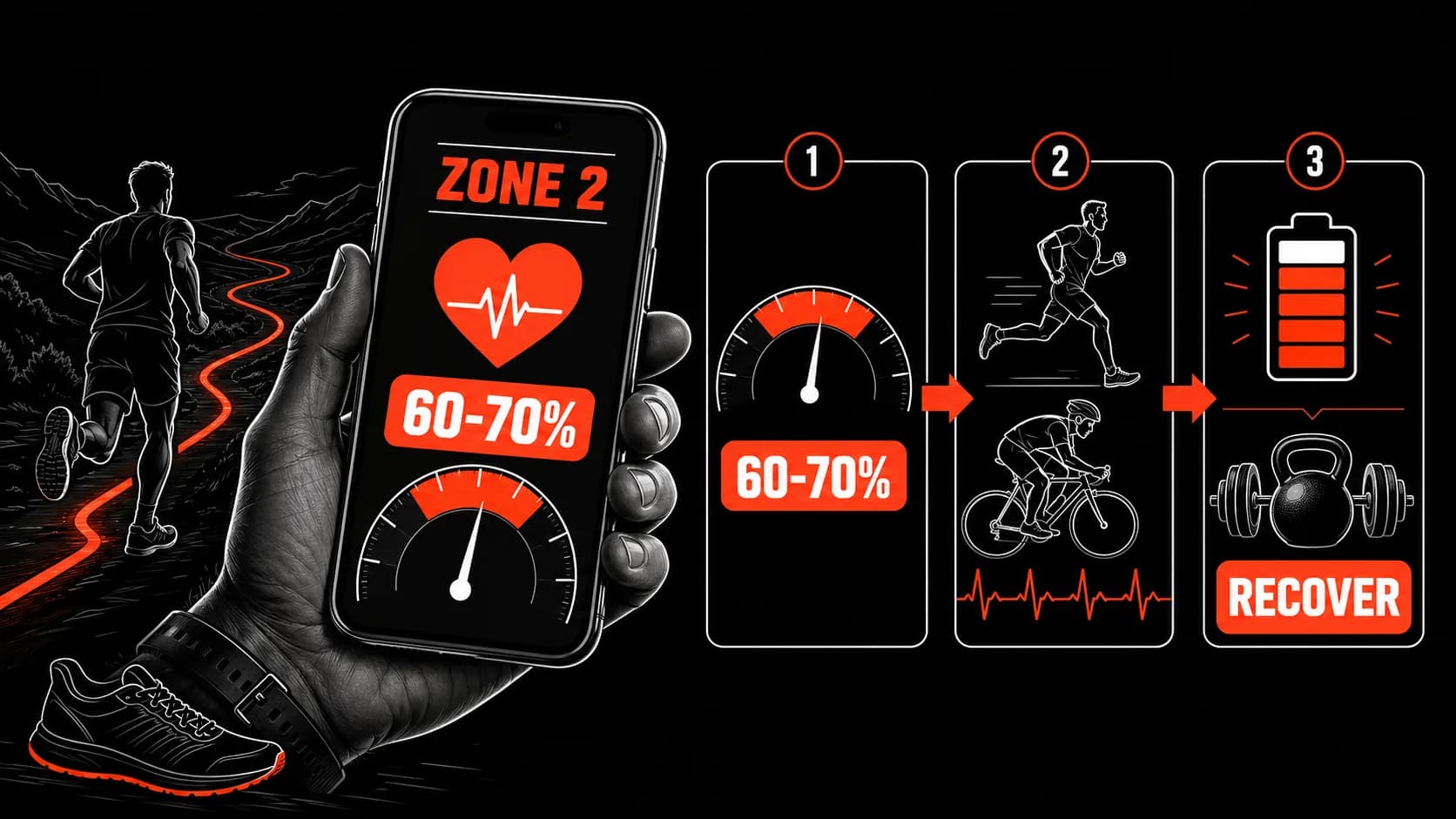
This is where most athletes get it wrong. They know they need zone 2, but they don't know how to do it properly. They end up working too hard, not hard enough, or doing the wrong modalities. Here's the exact protocol I use with my athletes.
Step 1: Find Your Zone 2 Heart Rate Range
Your zone 2 heart rate range often sits around 60-70% of maximum heart rate. To estimate your max heart rate, use the formula 220 minus your age. For a 30-year-old athlete, that's 190 bpm max, so zone 2 would be about 114-133 bpm.
But formulas are estimates. The most accurate way to find your zone 2 is the "talk test." You should be able to speak in full sentences without gasping for air. If you can sing, you're in zone 1. If you can only say a few words at a time, you're in zone 3 or higher.
The most precise method is a lab or field lactate test, but most fighters do not need that to start. For most athletes, the talk test combined with a heart-rate monitor is sufficient. Titans Grip can help you log your easy aerobic sessions beside sparring, lifting, and WODs so you can see whether more Zone 2 improves or hurts your next hard session.
Step 2: Choose the Right Modalities
Not all cardio is created equal for zone 2. The best modalities are those that allow you to maintain a steady heart rate without large spikes. Here's a comparison table with honest limitations:
| Modality | Zone 2 Effectiveness | Impact Level | Best For | Limitations |
|---|---|---|---|---|
| Stationary bike | Excellent | Low | All athletes | Can cause hip or knee discomfort if not set up properly; may not engage upper body |
| Rowing machine | Excellent | Low | Full-body conditioning | Requires proper technique to avoid back strain; can be hard to stay in zone 2 due to power fluctuations |
| Incline walking | Excellent | Low | Recovery days | Low calorie burn per minute; requires a treadmill or hill access |
| Swimming | Good | Low | Upper body recovery | Hard to monitor heart rate in water; requires access to a pool |
| Ski erg | Good | Low | Fighters, CrossFitters | Can cause shoulder fatigue; expensive equipment |
| Running | Fair | High | Only for experienced runners | High impact on joints; hard to stay in zone 2 for beginners |
I recommend the stationary bike or rowing machine for most athletes. They allow precise heart rate control and put minimal stress on joints. Running is fine if you're already a runner, but most fighters and lifters have enough joint stress from their sport. Adding high-impact running for zone 2 is unnecessary risk.
Step 3: Schedule Your Zone 2 Sessions
The timing of zone 2 training matters. Here's the schedule I use with my athletes:
- Morning sessions (before sport training): 30-45 minutes of zone 2 on the bike or rower. This wakes up the nervous system without fatiguing you for later training.
- Post-training sessions: 20-30 minutes of zone 2 after your main workout. This aids recovery by flushing metabolic waste products from muscles.
- Separate sessions: 45-60 minutes on rest days or light training days. This is where you build the most aerobic capacity.
For fighters, I recommend 3-4 zone 2 sessions per week, totaling 2-3 hours. For powerlifters and CrossFitters, 2-3 sessions per week, totaling 1.5-2.5 hours. The key is consistency. A 30-minute session every day is better than a 2-hour session once a week.
Step 4: Monitor Your Progress
Zone 2 training should get easier over time. If you're doing it right, you'll notice that your heart rate stays lower at the same pace or power output. This is called "cardiac drift" and it's a sign of improving aerobic fitness.
Track your heart rate, pace, and perceived exertion for each session. After 4-6 weeks, you should see a 5-10 bpm decrease in your average heart rate at the same workload. According to data from TrainingPeaks, athletes who consistently train in zone 2 see a 10-15% improvement in power at lactate threshold after 12 weeks.
Titans Grip's AI coach tracks these metrics automatically and adjusts your zone 2 range as you improve. It also logs your sessions alongside your sport-specific training, so you can see how your aerobic base affects your performance in sparring, lifting, or WODs.
Step 5: Combine Zone 2 with Sport-Specific Training
This is where most programming fails. Athletes either do zone 2 and neglect sport-specific work, or they do sport-specific work and neglect zone 2. The solution is integration.
For fighters, do zone 2 on your light training days or in the morning before technique work. For powerlifters, do zone 2 after your main lifts or on your accessory days. For CrossFitters, use zone 2 as your warm-up and cool-down for metcons.
The goal is to build your aerobic base without compromising your sport-specific adaptations. Use the concurrent-training rule of thumb: separate longer endurance work from heavy lower-body lifting when possible, and do not let easy cardio become hidden fatigue.
Step 6: Avoid Common Zone 2 Mistakes
The most common mistake is working too hard. Zone 2 should feel easy. If you're breathing hard, you're in zone 3 or higher. If you're sweating profusely, you're probably too high. Zone 2 is a conversation pace.
The second mistake is not doing enough volume. 20 minutes of zone 2 is better than nothing, but it's not enough to drive meaningful adaptations. You need at least 30 minutes per session, and ideally 45-60 minutes for maximum benefit.
The third mistake is using zone 2 as a replacement for sport-specific conditioning. Zone 2 builds your aerobic base, but it doesn't replicate the demands of your sport. You still need high-intensity work. Zone 2 is the foundation, not the house.
Step 7: Use AI Coaching to Optimize Your Zone 2
This is where technology changes the game. Titans Grip's AI coach can auto-detect your zone 2 heart rate range, log your sessions, and adjust your training based on your recovery status. It integrates with your sport-specific training log, so you can see how your zone 2 work affects your performance in the gym or the ring.
For example, if your log shows that heart rate drifts higher during easy sessions, you may need less intensity or a recovery day. If your sparring performance declines after adding volume, you may need fewer minutes or a different modality. The point is to make the trade-off visible instead of guessing.
I've used AI-assisted logs for endurance work with fighters and strength athletes for two years. The useful part is not a magic prediction. It is the habit loop: record the session, compare it with readiness and sport performance, then adjust next week's minutes before fatigue becomes a pattern.
Zone 2 training is simple but not easy. The hard part is doing it consistently.
Proven Strategies to Maximize Zone 2 Benefits for Combat Athletes
Once you've built your zone 2 foundation, you can start using it strategically to enhance your sport-specific performance. Here are the advanced strategies I use with elite fighters and athletes.
How to Periodize Zone 2 Training Around Competition
Periodization is the key to peaking for competition. For fighters, I recommend a 12-week cycle: 8 weeks of base building with 3-4 zone 2 sessions per week, then 4 weeks of tapering down to 1-2 sessions per week while increasing sport-specific intensity.
The key is to build the base early, then shift focus to sport-specific conditioning as competition approaches. If you keep adding Zone 2 volume deep into fight week, you may arrive with more fatigue instead of more fitness.
For powerlifters, I recommend a similar approach: 8 weeks of base building during the off-season, then reducing zone 2 volume during the 4-week peaking phase before a meet. For CrossFitters, maintain 2-3 zone 2 sessions per week year-round, with slight reductions during competition weeks.
What Are the Best Zone 2 Protocols for Fighters?
Fighters have unique needs because their sport requires repeated high-intensity bursts with short rest periods. Here are three protocols I use:
-
The "Fight Pace" Protocol: 3 minutes of zone 2 work, followed by 1 minute of rest. Repeat 5-10 times. This mimics the work-to-rest ratio of a boxing or MMA round while keeping intensity low enough to stay in zone 2.
-
The "Recovery Flush" Protocol: 20 minutes of zone 2 immediately after sparring or high-intensity training. Active-recovery research supports easy movement for lactate clearance, but you should still keep it easy enough to leave the gym better than you entered.
-
The "Long Slow Distance" Protocol: 60-90 minutes of steady zone 2 work on a rest day. This is the most effective protocol for building mitochondrial density and improving fat oxidation.
How Does Zone 2 Training Affect Strength and Power Output?
The fear that zone 2 training will automatically reduce strength and power is too broad. Concurrent-training reviews show that interference risk depends on dose, sequence, modality, and athlete status. A fighter who adds two easy bike sessions is not doing the same thing as a lifter who adds hard running intervals before squat day.
In fact, many athletes see improvements in strength endurance and work capacity. I've had powerlifters add 20 pounds to their deadlift after 8 weeks of zone 2 training because they could recover faster between heavy sets and accumulate more volume in their accessory work.
The key is to keep zone 2 intensity low. High-intensity cardio (zone 3-5) can interfere with strength gains because it increases cortisol and fatigues the central nervous system. Zone 2 does neither.
What Role Does Nutrition Play in Zone 2 Training?
Zone 2 training can work fed or fasted. Fasted sessions may feel convenient for body-composition phases, but they are not mandatory and they can backfire if you already under-fuel hard training.
For athletes with high training volumes, Zone 2 with some carbohydrates can improve session quality and next-day readiness. The best approach is to test: try one fasted easy session and one fed easy session, then compare mood, HR drift, sparring quality, and sleep.
For fighters making weight, zone 2 training in a fasted state can also help with body composition. It's a low-stress way to create a calorie deficit without compromising performance.
The best athletes don't just train hard. They train smart. Zone 2 is smart training.
Decision Rules for Zone 2 Training
Here are some simple decision rules to help you stay on track:
- If you're unsure about intensity: Use the talk test. If you can speak in full sentences, you're in zone 2. If you can't, slow down.
- If you're short on time: Do 20 minutes of zone 2 after your main workout. It's better than nothing and aids recovery.
- If you're feeling fatigued: Skip the high-intensity work and do a zone 2 session instead. It will help you recover without adding stress.
- If you're preparing for competition: Reduce zone 2 volume 2 weeks out and focus on sport-specific conditioning.
- If you're injured: Zone 2 on a stationary bike or in a pool can maintain your aerobic base without stressing the injured area.
FAQ: Zone 2 Training for Fighters
What is zone 2 training for fighters and why is it important in 2026?
Zone 2 training for fighters is low-intensity cardiovascular exercise performed at 60-70% of maximum heart rate, where the body primarily uses fat for fuel. It's important in 2026 because it builds the aerobic base needed to recover between rounds, clear lactate faster, and train more frequently without injury. Peter Attia's work has made this approach mainstream, and top UFC fighters now use it as a core part of their conditioning.
How much zone 2 training do I need per week as a fighter?
The minimum effective dose is 150 minutes per week, or 30 minutes 5 days per week. For optimal results, aim for 3-4 hours per week. This can be split into 45-60 minute sessions on light training days or 20-30 minute sessions after your main workouts. The key is consistency over volume.
Can zone 2 training replace my high-intensity conditioning?
No. Zone 2 training builds your aerobic base, but it doesn't replicate the demands of combat sports. You still need high-intensity sparring, bag work, and sport-specific conditioning. Zone 2 is the foundation that allows you to do more high-intensity work without breaking down. Think of it as the engine, not the race.
Will zone 2 training make me slower or weaker?
No. Zone 2 training has no negative effect on maximal strength or power output when kept at 3 hours per week or less. In fact, it can improve strength endurance and work capacity by improving recovery between sets and sessions. The fear that "cardio kills gains" is based on high-intensity cardio, not zone 2.
How do I know if I'm in zone 2?
The most accurate method is a heart rate monitor. Your zone 2 range is 60-70% of your max heart rate (220 minus your age). The talk test is also reliable: you should be able to speak in full sentences without gasping. If you can sing, you're too low. If you can only say a few words, you're too high.
What's the best time of day to do zone 2 training?
Morning sessions before sport training are ideal because they wake up the nervous system without causing fatigue. Post-training sessions are also effective for recovery. The worst time is right before bed, as the elevated heart rate can interfere with sleep. Find a time you can stick to consistently.
Can I do zone 2 training every day?
Yes, but it's not necessary. Most athletes benefit from 3-5 zone 2 sessions per week. Doing it every day can lead to overuse injuries or burnout if you're not careful. Listen to your body and take rest days when needed.
How long until I see results from zone 2 training?
You'll notice improvements in recovery and endurance within 4-6 weeks. Significant changes in mitochondrial density and fat oxidation take 8-12 weeks of consistent training. Be patient and stay consistent.
Ready to Build Your Engine?
Zone 2 training is the missing piece in most athletes' programming. It's not flashy, but it works. Whether you're a fighter trying to last five rounds, a powerlifter trying to recover between heavy sets, or a CrossFitter trying to survive the Open, zone 2 will make you better.
Titans Grip makes it easier to track Zone 2 sessions beside your fight conditioning, lifting, and skill work. Use the cardio zones calculator, round timer, training load calculator, and boxing combo tool when you plan the week. If boxing is your base sport, start from the Boxing AI app page and treat Zone 2 as the quiet work that lets you practice more often.
Other Doved Studio projects
Related tools from the same studio you might find useful:
- Glean: Turn scrolling time into a daily action plan. Capture, process, execute.
- Popout: Create your portfolio in minutes with a single shareable page.
- Doved Studio: Studio indie derrière cette app et une dizaine d'autres outils.
Coach Marcus
Boxing specialist. Expert in footwork, combinations, defense.
Coach Marcus is the AI coaching persona behind Boxing AI, built to provide personalized boxing guidance through video analysis, training plans, and technique breakdowns.
Related Articles
Train Boxing with AI
Boxing AI gives you an AI coach that analyzes your technique, plans your training, and tracks your nutrition. Try it for free.